The Economist is a British media organization that publishes consistently anti-transgender articles. Although most articles are unsigned, anti-trans writer Jesse Singal is the author of many of the pieces listed below after January 2024.
The only notable exception to its anti-trans content are essays by transgender Labour Party candidate Emily Brothers, published as part of a two-week series on trans topics.
Uncredited (November 6, 2021). Portrait of a detransitioner as a young woman.The Economist https://www.economist.com/united-states/2021/11/06/portrait-of-a-detransitioner-as-a-young-woman
Emily Yoffe is an American author and anti-transgender activist. Yoffe’s anti-trans coverage in The Free Press was rewarded by the Trump administration, which gave Yoffe the exclusive on their January 2025 executive order “Defending Women from Gender Ideology Extremism and Restoring Biological Truth to the Federal Government.”
Background
Emily Joy Yoffe was born October 15, 1955. Yoffe graduated from Wellesley College in 1977.
In 1994 Yoffe married reporter John Douglas Mintz (born 1952). Their child Eliora Rose Mintz (born 1995) is a lawyer.
Yoffe wrote the “Dear Prudence” advice column for Slate from 2006 to 2015.
Anti-transgender activism
In 2020, Yoffe signed the “Harper’s Letter,” which featured many other anti-trans activists in Yoffe’s circle.
Yoffe contributed to the anti-trans publication The Free Press in 2022 and joined the staff later that year.
Jamie Reed allegations
In 2023, Jamie Reed came forward to complain about treatment protocols at employer Washington University Transgender Center at St. Louis Children’s Hospital. Republican Ernie Trakas joined Vernadette Broyles in representing Reed. Both are involved in the Child and Parental Rights Campaign, which claims “gender ideology” is a threat to children.
Yoffe interviewed Reed with Broyles and Bari Weiss.
“Caroline” allegations
Also in 2023, Yoffe followed up with a self-report from “Caroline,” an unsupportive parent of “Casey,” who attended the St. Louis Clinic. “Casey”disputed Yoffe’s reporting, feeling it was necessary to do so under the actual name Alex:
My name is Alex. Emily Yoffe and Bari Weiss worked in cooperation with my mom to write an article about our experience with Washington University. The article is filled with falsehoods and misconceptions. Now, my family is being threatened with legal action from big-time lawyers and we need help paying for legal defense. More at https://twitter.com/sleepyoktobur/status/1643347040250781706?s=46
The leading transgender health organization promotes life-altering interventions on minors — some that leave young people sterile. @LisaSelinDavis has the story. https://t.co/1iQc8RG6eQ
In May 2024, Texas surgeon Eithan Haim was charged with illegally obtaining the private medical records of pediatric patients receiving gender transition care at Texas Children’s Hospital and sharing them with anti-trans activist Christopher Rufo. Yoffe presented Haim as a heroic truth-teller in several Free Press articles. In 2025, the Trump administration dropped the charges against Haim.
The Femsplainers with Danielle Crittenden and Emily Yoffe (Augist 1, 2020). “Use Your Words! Wait, No Cancel That…” https://www.youtube.com/watch?v=3IrbKc5UDwU
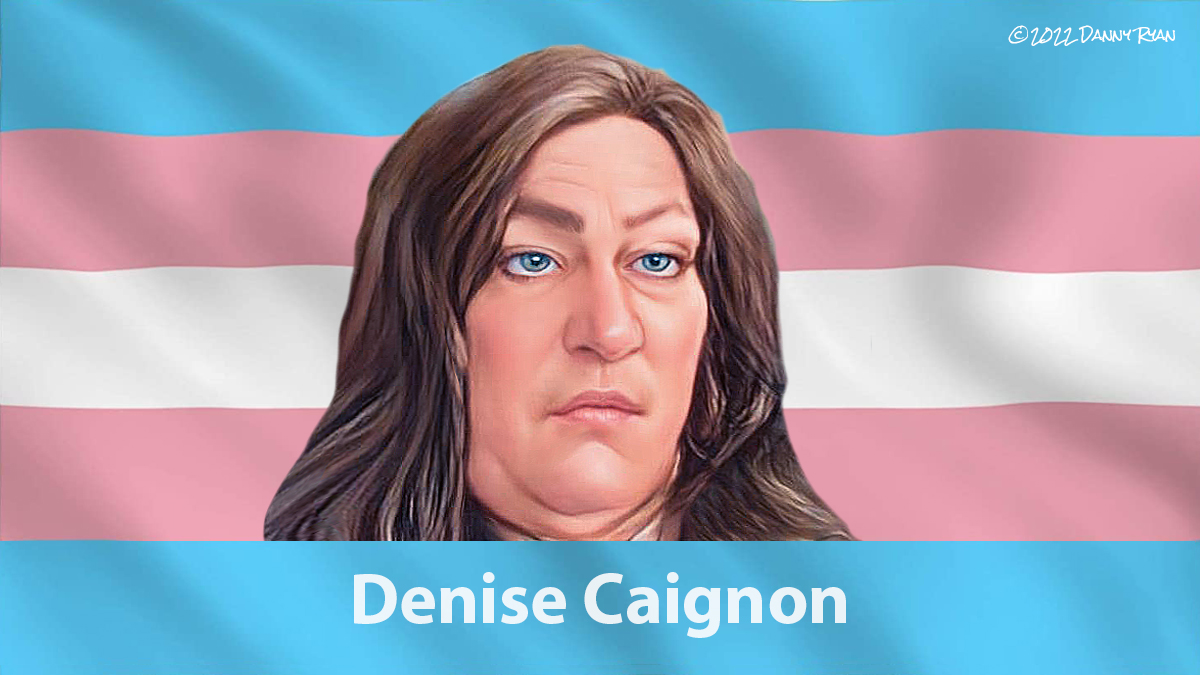
Denise Caignon is an American author and anti-transgender extremist.
Caignon founded anti-transgender site 4thWaveNow in 2015 and has appeared in the media under a number of aliases, including:
“Marie Verite”
“Denise Canaan”
“Janette Miller”
Caignon’s site became one of the most prominent transphobic platforms, surviving a purge of similar anti-trans sites that violated hosts’ terms of service. Caignon is a key developer of the controversial “rapid onset gender dysphoria” diagnosis. Caignon’s child Chiara Caignon-Lewis is a prominent member of the “ex-trans” wing of anti-trans activists.
Background
Denise Jeanette Caignon was born in 1955 to a family that moved frequently. After graduating from Louisville Collegiate School in 1973, Caignon soon moved to California and began getting involved in second-wave feminism.
Self-defense and “take back the night” initiatives were an important focus of second-wave feminism starting in the 1970s. The belief was that direct confrontation can exert community control over rapists’ behavior. In 1972, not long before Caignon’s arrival, Santa Cruz Women Against Rape (SCWAR) was founded as an “alternative anti-Rape organization in which women support women.” The non-hierarchical collective had many lesbian members and offered a 24-hour rape hotline and free self-defense workshops. They also maintained a published list profiling alleged male rapists, assaulters, and harassers. They were later sued by someone on the list.
One of the women involved with the SCWAR hotline was queer activist Gail Groves. During six years working on the rape hotline, Groves realized that many stereotypes about sexual assault were inaccurate. Caignon and Groves studied judo together, and they soon founded Santa Cruz Women’s Self-Defense Teaching Cooperative. They also founded Women Who Resist: The Success Story Project to catalog strategies for preventing and surviving a sexual assault. In 1987, they published these first-hand reports as Her Wits About Her: Self-Defense Success Stories by Women. They taught a class that role-played real situations, recommending that students prepare for common issues like attack cues and verbal abuse from attackers.
Caignon has helped produce other publications and served as an editor of the Buddhist publication Turning Wheel for many years, guest editing three issues: intentional communities, engaged lives, and fundamentalism. Caignon ended that work in 1999 to spend more time with spouse Tim Lewis and their child Chiara.
After living in California for 27 years, Caignon moved to North Carolina and studied at the University of North Carolina at Chapel Hill to be a speech-language pathologist. In keeping with a longstanding interest in intentional communities, Caignon has a residence in a cohousing community in Carrboro. Caignon earned a master’s degree in 2007 and practiced in the area until retiring in 2014. Caignon’s focus was on aphasia related to strokes. Caignon helped develop Life Interest and Value (LIV) Cards, a way for people with speech loss to improve communication.
Chiara Caignon-Lewis
Caignon’s only child Chiara Caignon-Lewis was born in 1997. As an adolescent, Chiara was heavily active on Tumblr, and at one point alleged on the platform to have experienced sexual abuse as a child by Chiara’s seminal parent. These allegations align with the date of Denise Caignon’s sudden move to North Carolina after 27 years in California.
Because Denise Caignon’s entire life, career, and identity were built around preventing sexual assault, these allegations must have been completely devastating. If true, Denise Caignon failed to prevent the sexual assault that was the most deeply personal. Denise Caignon’s guilt and rage needed an outlet, and Chiara soon provided one.
Chiara began identifying as transgender online in 2013, at age 16. Chiara had already come out as queer and had started dating, but an incident at school had left Chiara with few friends in real life. Chiara turned to online communities, claiming that popular trans users on Tumblr and YouTube caused a multi-year obsession with transition.
At age 17, Chiara came out to Denise via a texted link to a gender clinic. Denise refused to let Chiara take medical transition steps, which led to a lot of fighting. At the height of the fighting, Denise got heavily involved with posting anti-transgender materials online and attending trans-exclusionary events. In an interview with Chiara, Denise said:
“I was fortunate to be able to meet two detransitioners I’d discovered online in person when I attended the Michigan Women’s Music Festival in 2015.”
In 2015, Denise sent Chiara to a Florida horse farm for nine months, after which Chiara claims the desire to transition subsided without taking any legal or medical steps. Denise and Chiara then teamed up to be one of the most high-profile famiies in the modern ex-trans movement.
Unlike the second-wave feminism of Caignon’s youth, third-wave feminism is largely trans-inclusive. Caignon’s site name 4thWaveNow is a call to replace that third-wave feminism with a transphobic fourth wave.
Haley KL, Womack JL, Helm-Estabrooks N, Caignon D, McCulloch KL (2010). The Life Interest and Values Cards. Chapel Hill, NC: University of North Carolina Department of Allied Health Sciences.
McIntyre, Carl (2010) Aphasia. Bonus materials: Interview with Denise Caignon, MS, CCC-SLP, Carl’s Speech Pathologist
Haley K, Helm-Estabrooks N, Caignon D, Womack J, McCulloch K (2009). Self-determination and life activity goals for people with aphasia. Annual Convention of the American Speech-Language-Hearing Association, New Orleans, LA
Haley KL, Helm-Estabrooks N, Womack J, Caignon D, McCracken E (2007). A pictorial, binary-sorting system allowing “self-determination despite aphasia. American Speech-Language-Hearing Association, Boston, MA.
Moon, Susan (2004). Not Turning Away: The Practice of Engaged Buddhism. Shambhala Publications ISBN 9781590301036
Helena Norberg-Hodge, Peter Goering, John Page (2001). From the Ground Up: Rethinking Industrial Agriculture. [Caignon handled production and layout] Zed Books ISBN 978-1856492232
Caignon, Denise, consulting ed. (1999). Turning Wheel: Journal of the Buddhist Peace Fellowship
Groves, Gail (1995). “And He Turned Around and Ran Away.” in Patricia Searles, Ronald J. Berger (eds) Rape and Society: Readings on the Problem of Sexual Assault. https://doi.org/10.4324/9780429493201
Levoy, Gregg (November 6, 1990). Teaching women to fight back. Washington Post https://www.washingtonpost.com/archive/lifestyle/wellness/1990/11/06/teaching-women-to-fight-back/605287cd-e0cf-4672-b3a3-642e3f0074b4/
Note: In 2025, this site phased out AI illustrations after artist feedback. The previous illustration is here.
Jacobin is an American socialist media organization that has published consistently trans-supportive content and included trans journalists.
Background
Jacobin was founded by Bhaskar Sunkara. In September 2010 the Jacobin online magazine started, then expanded to a print version later in 2010. In 2017, Jacobin launched the peer-reviewed journal Catalyst: A Journal of Theory and Strategy and Jacobin Radio.
Sarah Mittermaier aka “Eliza Mondegreen” and “elizaoltramare” is an American-Canadian anti-transgender activist. Mittermaier is affiliated with numerous anti-trans organizations and figures:
Sarah Beth Mittermaier was born in May 1987 to Paul Mittermaier, an Episcopal minister, and Beth (Wagel) Mittermaier, an artist. Both parents are from Ohio, but Sarah Mittemaier grew up in Wisconsin.
Mittermaier attended University of Wisconsin-Madison, earning a bachelor’s degree in 2009. Mittermaier was a copy editor at the Daily Cardinal and a contributor to the Badger Herald. Mittermaier worked at several organizations, including the Prevention Institute, before returning to school at McGill University in Montreal.
Mittermaier was a member of WPATH while residing in Washington, DC.
Anti-transgender activism
In 2021 Mittermaier and Kitty Robinson founded the “LGB erasure” conspiracy website Unspeakable for “finding a language for female experiences in the LGBTQ+ community.” It allowed people to post anonymous rants, mostly from anti-trans people who identify as lesbian.
Mittermaier earned a master’s degree from McGill University in 2024. Mittermaier’s thesis was on “detransition” in the context of reddit communities, especially r/detrans. Mittermaier’s advisors were Samuel Veissière and Cecile Rousseau. Mittermaier includes a disclosure about being involved with SEGM:
During my time as an M.Sc. student, I worked with the Society for Evidence-Based Gender Medicine to help organize three conferences for researchers and clinicians working in the area of youth gender dysphoria. The first conference took place at Tampere University in Finland in June 2023, drawing researchers and clinicians from 17 countries with the objective of facilitating dialogue across the divide between affirming and exploratory approaches to youth gender distress. The second conference took place in New York City in October 2023. The third—Questioning Gender: Psychotherapeutic Approaches to Youth Gender Dysphoria—will be hosted by the Medical School of Athens in October 2024.
Mittermaier’s profile for the 2024 SEGM conference states:
Researcher and writer exploring the online communities where young people adopt new attitudes and beliefs about gender and set expectations and intentions for transition. Her MSc. thesis, Questions and doubts in online trans communities, will be available this autumn through McGill University. She writes gender:hacked on Substack.
Somji, Alisha’ Mittermaier, Sarah (December 7, 2017). How we all together can build a future free from sexual harassment.San Francisco Chronicle https://web.archive.org/web/20171208115210/https://www.sfchronicle.com/opinion/openforum/article/How-we-all-together-can-build-a-future-from-12414346.php
Rousseau C, Johnson-Lafleur J, Ngov C, Miconi D, Mittermaier S, Bonnel A, Savard C, Veissière S. (2023). Social and individual grievances and attraction to extremist ideologies in individuals with autism: Insights from a clinical sample. Research in Autism Spectrum Disorders (Vol. 105, p. 102171) https://doi.org/10.1016/j.rasd.2023.102171
Sims J, Baird R, Aboelata MJ, Mittermaier S (2022). Cultivating a Healthier Policy Landscape: The Building Healthy Communities Initiative. Health Promotion Practice (Vol. 24, Issue 2, pp. 300–309). https://doi.org/10.1177/15248399221114341
Sandra Ramírez (Feb 1, 2024). Eliza Mondegreen, USA/Canada, The secret life of gender clinicians #FQT #WDI. Women’s Declaration International https://www.youtube.com/watch?v=wrbxNvEc-bY
Chloe Pacey and Keshia Tognazzini (Jan 22, 2024). Exploring Affirmative Care: Navigating Online Trans Communities with Eliza Mondegreen. The Road To Wisdom Podcast https://www.youtube.com/watch?v=APK-0Cw3DV0
Meghan Daum (Oct 24, 2023). Down The Rabbit Hole: Gender and Online Communities with Eliozan Mondegreen and Sarah Haider. A Special Place in Hell https://www.youtube.com/watch?v=TJew30KNxqk
Sarah Phillimore (Feb 14, 2023). Eliza Mondegreen on WPATH conference, research on gender affirming care and more. [Rona Duwe, Eliza Mondegreen, Shannon Thrace] Women’s Declaration International https://www.youtube.com/watch?v=f6NFf8e3Is8
Julia Long (Jul 4, 2022). Language and the Values that Underlie Our Movement [Kara Dansky, Eliza Mondegreen, Jesika Gonzalez, and Amanda Stulman]. Women’s Declaration International https://www.youtube.com/watch?v=P6oKt-wLo5g
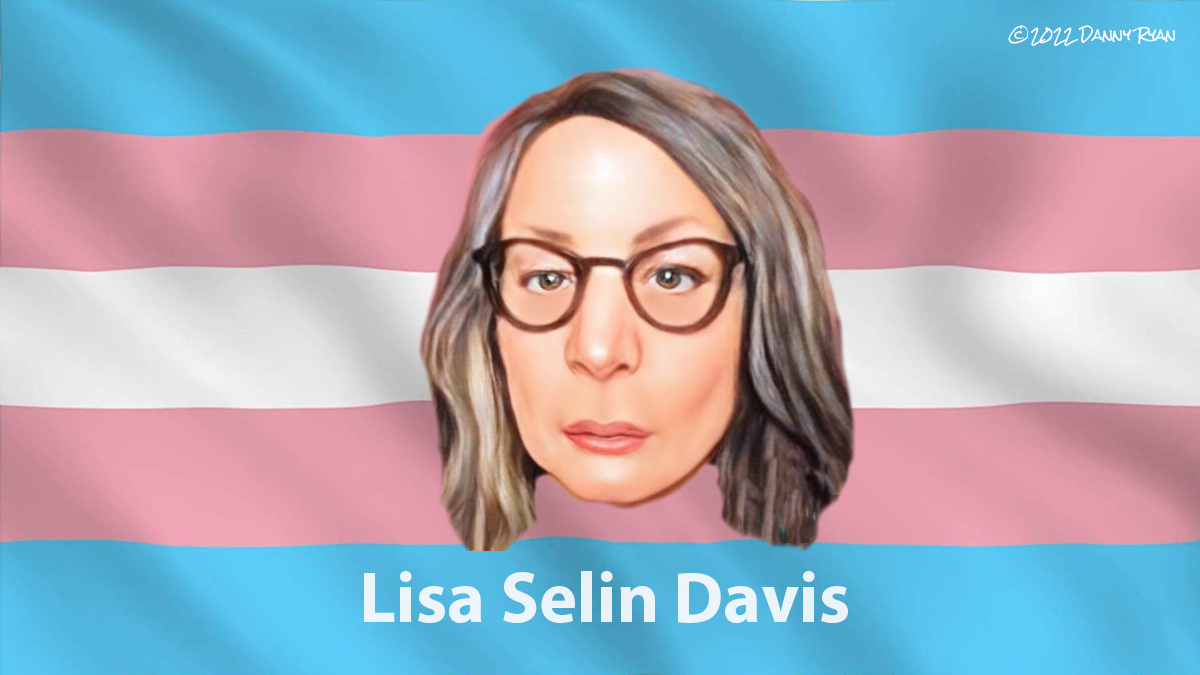
Lisa Selin Davis is an American author and “gender critical” activist involved in anti-transgender extremism. Since 2013, Davis has become a key anti-trans voice in American media, part of the movement’s “parental rights” faction. Davis has a gender diverse child and is unaccepting of the child’s interest in gender transition.
Davis’ attacks on the trans rights movement center on several gender critical tactics:
using Davis’ own child to draw sharp distinctions between the “tomboy” identity and other gender diverse youth identities
amplifying outliers and edge cases in controversies to derail broader discussions
Davis claims “there is a dominant narrative about trans kids that the media is promoting.” According to Davis, this alleged narrative is merely “mantras by activists” and based on “feeling over fact.” Davis claims to have concerns about the affirmative model of care and is troubled that fellow anti-trans activists can no longer publish their conservative beliefs without consequence.
Davis claims to be a liberal who is part of the “silenced center.” Davis disavows being part of the gender critical world or the gender affirming world and simply wants to “diversify the media narrative.” So far, Davis’ “viewpoint diversity” efforts have largely been the promotion of extremist clinicians, cultural critics, and activists with similar gender critical beliefs.
Background
Davis was born January 18, 1972. Davis’ parent Peter is a musician who plays in a group called Annie and the Hedonists. Davis’ youth was spent in a Massachusetts suburb with parent Helaine Selin (born 1946), a librarian and author.
Helaine Selin worked at Hampshire College and helped “nepo baby” Davis attend, then graduate in 1993 with a bachelor’s degree in film studies. Davis then moved to New York City and lived with sibling Benjamin Lazar Davis, a musician. Davis built props at Nickelodeon for a few years, then earned an MFA in writing from Arizona State University in 2003.
Davis has edited a number of publications and websites, including Upstate House magazine, Senior Planet, KGB Bar, upstater.net, and brownstoner.com. Davis is the author of young adult novels Belly (2005) and Lost Stars (2016). Davis stopped writing in the genre, alleging it was no longer possible to write about characters from other demographic groups. Davis’ non-fiction writing has appeared in several publications, including Grist, The Wall Street Journal, Time, the New York Times, Quillette, and Quartz.
Davis and spouse Alex F. Sherwin live in New York with their two children, Enna and Athena. Davis’ 2020 book Tomboy is dedicated to them.
2013 Parenting article
In 2013, Davis wrote a piece for Parenting just before the magazine closed, titled “My Daughter Wants to be a Boy!” The title was stealth edited in 2017 to “My Daughter Is a Tomboy!” and the article was edited to remove some identifying information. The article was removed from the Parenting.com website in 2018, though the site remains online as part of a 2021 asset transfer from Meredith to Dotdash. The original version describes Davis’ child:
She insisted on being Spiderman for Halloween, and on getting light-up superhero sneakers “like my friend Luca’s” when she needed new shoes. They told us at school that she gravitated toward the boys, and though she is quite small for her age, and not particularly hearty, they told us she could hold her own with the rowdy bunch of them.
And again, I thought, “How great is she?”
Well, okay, 90% of me said that. The other 10% thought, “uh-oh.” As she started to announce in ways both subtle and direct that she’s a boy, and ask me questions like “Why can’t boys have vaginas and girls have penises?” the ratio of heartwarming to heart-sinking has shifted.
Let me say that I don’t hold particularly conventional views about gender or sexuality. There are so many lesbians in my family that I fully expect either or both of my daughters to be gay (though of course I will love and accept them if they turn out to be heterosexual). But there is something about having the only girl who won’t play princess, the only girl in the school who thinks and says she’s a boy, that has shaken me a bit. Dressing like a boy? Cool. Thinking you actually are a boy? Way more complicated. […]
Some of my fears for Enna-as-boy are rooted in reality. It’s a much harder way to move through the world, identifying with the gender you weren’t assigned at birth.
2017 New York Times op-ed
In 2017, Davis wrote an op-ed in the New York Times insisting that their child is not transgender, but instead a “tomboy.” Davis says author Jennifer Finney Boylan gave it the thumbs up, and Davis claims the whole community on Twitter then gave it the thumbs up.
Following its warm reception among conservatives and anti-trans thought leaders, Davis was given a book deal and turned the piece into the 2020 book Tomboy. Despite a book deal and many subsequent writing gigs and media appearances, Davis claims to have been “cancelled” for the op-ed. Davis reportedly met with Chase Strangio and Kate Bornstein about Davis’ “concerns about the dominant narrative” that affirming care benefited gender diverse youth.
Drawing parallels to the response to Jesse Singal’s transphobic 2018 piece in The Atlantic, Davis claims to be part of a group of “left wing” people who meet surreptitiously to plan strategies that undermine affirming care and promote the “Dutch protocol” for gender diverse youth, a gatekeeping model of care sometimes called “watchful waiting.”
2020 book Tomboy
In an expansion of the 2017 op-ed, Davis’ thesis is that masculine girls have recently disappeared from the cultural landscape. This erasure narrative about “tomboys” and lesbians is a major talking point among gender critical and trans-exclusionary separatists.
Cultural criticism
The narrative Davis puts forth is permeated with metaphors of disease and impairment. Davis describes some gender diverse youth as being influenced by peers and having “comorbidities” that should be cured before they are approved for gender affirming health services. Davis has concerns that medical transition is being used “as a panacea for other mental health issues.”
Davis’ binary view about transitioning to “the opposite sex” presents trans rights as a moral dilemma that could harm cisgender people: “Do we want to make decisions that are worse for the majority of people but they benefit a small group?”
Davis has criticized Stanford University School of Medicine psychiatrist Jack Turban for asking the media not to use the term “detransition.” Davis was offended after getting criticized by Turban during an interview request. Davis uses the term “activist” as a thought-terminating pejorative for anyone who does not share similar views, even subject matter experts like Strangio and Turban.
Meanwhile, Davis supports numerous controversial disease models of sex and gender diversity, including Ray Blanchard‘s sex disease “autogynephilia” and Kenneth Zucker‘s diseases like “gender identity disorder” and “gender dysphoria.” Davis has spoken with ex-trans activists like James Shupe and supports conservative trans people such as Aaron Kimberly and Scott Newgent.
2022 Quillette profile of Erica Anderson
Davis complained after The Nation noted that gender critical publication Quillette was deemed transphobic for promoting “rapid-onset gender dysphoria” and other conservative beliefs about gender diverse youth. Davis told fellow anti-trans activist Benjamin Boyce, “I don’t read Quillette, but I know they have a more diverse media narrative around this issue.”
A couple of months later, Davis profiled conservative transgender clinician Erica Anderson in Quillette. Anderson began litigating conservative clinical views about trans and gender diverse youth in the press in 2021. Because USPATH had specifically stated that clinical disputes should be discussed among professionals and not litigated in the lay press, Anderson resigned from USPATH in a move to get more attention for these conservative clinical views from people like Davis.
2022 Newsweek op-ed
In a classic case of false balance and “bothsidesism,” Davis made the case against affirmative care in a Newsweek piece titled “What Both Sides Are Missing About the Science of Gender-Affirming Care.” As usual, one of the best ways to analyze Davis’ bias is via the proportion of text and links. These pieces always start of with a veneer of journalism, then quickly make a case for one position. Unlike the infamous 2018 Atlantic piece by Jesse Singal, at least this one is labeled opinion.
Davis cites 3 neutral sources and 7 sources that reflect expert medical consensus. Davis cites 35 sources that dispute expert medical consensus and support the gender critical view, which could basically be summarized thus: being trans is a rapidly spreading disease that should be monitored and controlled by a state-run healthcare system overseen by conservative clinicians and legislators, where even one bad outcome must be prevented at all costs. Even if the cost is 100 good outcomes. Others with Davis’ cis-centric point of view would add even if the cost is prosecuting the families and doctors who work toward good outcomes.
2022 San Francisco Chronicle op-ed
This piece purports to condemn extremist anti-trans legislators. It also suggests that mainstream medical consensus is the extremism at the other end of the political spectrum. Davis once again praises federal healthcare systems that require children to travel to centralized clinics run by state-funded gatekeepers in hopes of receiving medical care capped by a federal budget. Despite extensive evidence about the drawbacks of such systems for minorities seeking health services, like the US Veteran’s Administration or Canada’s CAMH, Davis is convinced that systems like Sweden’s, or worse, the UK’s will prevent rare cases of regret.
2022 Skeptic special edition
Anti-trans activist Michael Shermer paid other members of the gender critical faction in the skeptic community to present their version of “the debate” about trans people. No trans contributors were invited. Joining Shermer in this attack were Harriet Hall, Carol Tavris, and Davis, whose piece is titled “Trans Matters: An Overview of the Debate, Research, and Policies.” Davis bristles about being lumped in with “conservative, transphobic bigots” and claims support for affirming models of care “is now a test of loyalty” among its supporters.
April 2022 Quillette piece
It was inevitable that Davis would become a regular contributor to Quillette’s steady stream of anti-trans articles. Davis’ efforts continued with a dogwhistle piece about “the encroachment of ideology on medicine by activists” and the “propaganda surrounding medical literature.” While the piece seems to condemn the national deluge of anti-trans legislation criminalizing trans healthcare, Davis’ real point is to claim that the government has gone too far in supporting trans youth. Davis cites several examples gleaned from anti-trans parenting forums.
September 2022 Boston Globe piece
Davis continues to place the same article in any outlet that will take it, in this case repurposing a Substack piece in the Boston Globe, which was then reprinted in the New York Post as “Kid gender guidelines not driven by science.” Davis blames WPATH for bomb threats against trans-affirming children’s hospitals, because they did not publish better Standards of Care. Davis quotes anti-trans allies including Julia Mason of Society for Evidence-Based Gender Medicine and James Cantor, formerly of CAMH. Davis once again holds up federally controlled conservative gatekeeping as the ideal protocol.
Podcast
Beginning in 2022, Davis began a series of interviews, mostly with conservative and anti-transgender guests.
August 22, 2023: Heterodox Trans People #6: Phil Illy
Davis, Lisa Selin (December 19, 2021). Tomboys, trans boys and ‘West Side Story.’Los Angeles Times https://www.latimes.com/opinion/story/2021-12-19/tomboys-west-side-story-anybodys-gender-nonconforming-trans-people
Shupe, James [edited by Lisa Selin Davis] (September 14, 2021). Auogynephilia: In seach of my cure. Freed from editors and media outlets to report the truth about autogynephilia. Autogynephilia Diaries https://autogynephilia.substack.com/p/autogynephilia-in-search-of-my-cure [archive]
Davis, Lisa Selin (2013). “My Daughter Wants to be a Boy!” [retitled in 2017 as “My Daughter Is a Tomboy!” and removed in 2018] Parenting http://www.parenting.com/article/tomboy [archive]
Books
Davis, Lisa Selin (2024). Housewife: Why Women Still Do It All and What to Do Instead. Legacy Lit, ISBN 978-1538722886
Davis, Lisa Selin (2020). Tomboy: The Surprising History and Future of Girls Who Dare to Be Different. Legacy Lit, ISBN 978-0316458313
To the Contrary with Bonnie Erbé and Lisa Selin Davis (December 27, 2020). Woman Thought Leader Lisa Selin Davis. https://www.youtube.com/watch?v=QtnKjA48Uvc
Note: In 2025, this site phased out AI illustrations after artist feedback. The previous illustration is here.
On June 15, 2022, the New York Times Magazine published a piece by Emily Bazelon about healthcare for transgender and gender diverse youth. It was assigned by editor Jake Silverstein and centered on the 2022 Version 8 of the WPATH Standards of Care, a ritual document developed in the 1950s and codified in 1979 to protect healthcare providers from litigation and legislation via medical gatekeeping.
About a month after the 2022 trans piece ran, Bazelon deleted all Twitter posts. Below are the relevant deleted tweets. Each bullet is a separate tweet, in order posted by Bazelon.
@emilybazelon June 15, 2022:
For @NYTMag, I wrote about transgender healthcare for teenagers and the debate among medical professionals who treat them. [link to NYT article]
Here’s a gift article from NYT, meaning anyone can read it through this link (I hope!). [link to NYT article]
The focus of the story is a chapter on adolescents in a set of guidelines known as the Standards of Care, to be released by the World Professional Association for Transgender Health (@wpath) this summer. It’s WPATH’s first update of the Standards in a decade.
WPATH’s Standards of Care are meant to set a gold standard for the field of transgender health. A draft was released in December. The adolescent chapter is one of 18 chapters—and the one that generated the most discussion and debate.
WPATH gave me exclusive access to the final version of the Standards of Care & lifted confidentiality agreements so I could talk about the process of creating it with some authors, who are clinicians & researchers (trans, non-binary, cis) with long track records in the field.
I also talked to many young people and parents for this story. Their voices stayed with me. Thank you all for talking to me. I learned a ton from you. I’ve tried to represent many points of view in my piece.
As is often the case in medicine, the crux of the story is about how to apply existing research for the growing numbers of patients — in this case, teenagers — lining up for care.
The intrusion of politics into science makes it more difficult to set standards and to provide care. It is really hard to work on *improving* the quality of care when politicians are trying to ban it.
But that’s what’s happening as some states pass or consider bills to outlaw gender-affirming medical treatments for minors.
As with other fraught issues like abortion, America is becoming a split screen. In some states, gender-related care for young people is already rare yet faces legal threats.
At clinics that are mostly in progressive metropolitan areas, meanwhile, it’s not clear how common comprehensive assessments are. This is the type of evaluation, before medical intervention, that the new Standards of Care recommends.
Some families are bewildered by a landscape in which there are no labels for distinguishing one type of therapeutic care from another.
This is all unfolding as the number of teenagers who identify as trans in the U.S. is significantly rising, as my colleague @azeen reported last week. (Azeen is the fabulous NYT reporter on this science beat and if you’re interested in this issue, you should follow her!)
There are a lot of links in the piece to scientific research. Here also are a few historical sources that I want to highlight, starting with this article on the origins of WPATH by @beansvelocci [link to Standards of Care: Uncertainty and Risk in Harry Benjamin’s Transsexual Classifications]
The book Transgender History by @susanstryker [link]
The book Histories of the Transgender Child by @gp_jls [link]
This 2018 essay by @andrealongchu [link to On Liking Women]
Comments are open on my piece and I’ll try to respond to some later today, at the NYT link above.
Follow-up
I think an important point has gotten lost in the Twitter din over my @NYTmag piece on gender therapy for teenagers. (For the record, the response has been far different in NYT comments and very positive feedback from readers, including trans people & practitioners in the field.)
I have zero appetite for Twitter combat. It’s been horrifying to me to be called a murderer and compared to Nazis for writing about a debate that is happening, with consequential effects, *within* the field of gender-affirming providers.
I’m responding in this thread to criticism, not really expecting to persuade anyone to change perspectives, but to make some basic points about journalism that apply in this case and others, I think.
1) Criticism: The timing of the story was wrong because of the right-wing assault on trans rights. –My editors and I talked a lot about the political backdrop, which is threaded through my story and has deepened divisions in this field.
We decided the conflict makes WPATH’s Standards of Care, issued for the 1st time in a decade, more important. The Standards are the story’s focus *and the source* of the points that have caused controversy here, about how teens should be evaluated & the role of social influence.
The Standards at issue in my piece have the consensus support of the working group that wrote them and of WPATH’s leadership. Those groups include trans and non-binary practitioners.
2) Criticism: The framing of the story was wrong because it didn’t center the trans community. –No group of millions of people has a single community. It’s true that this story didn’t center trans activists or trans kids. (Though I did quote them at length.)
Those are also good stories, which the NYT has told and will tell. But this one is primarily told through the eyes of clinicians in & around WPATH. It’s about a scientific debate. Trans providers express every point of view the story contains about gender-affirming care.
3) Criticism: The story doesn’t include trans kids who are doing well. –False. Two kids in the story, nicknamed Tori & Charlie, are medically transitioning & thriving. Two adults (Yael & F.G.) speak to how critical transitioning in adolescence has been for their well-being.
4) Criticism: The story “platformed” the wrong people. –The story, in a total of 11,400 words, includes 363 words from the perspective of parents who are skeptical of medical interventions for minors. Some are affiliated with the group Genspect.
I made it clear what Genspect stands for by including comments of members & a post on strategy from an affiliated Substack. Skeptical parents are politically active, testifying in statehouses in favor of banning medical interventions for minors. Leaving them out of the story … would deny that reality, which would be a disservice to readers who want to understand the full landscape.
5) Criticism: There’s no evidence that substantial numbers of kids are transitioning without the kind of diagnostic assessments or process WPATH recommends. –No one is tracking this. Anecdotally, many clinicians—not one or two & very much including trans clinicians—told me … they are aware of this happening. I heard firsthand accounts—from teenagers as well as parents—of clinics offering medication during a first brief session. I did NOT hear of this in states that are proposing bans, where care seemed to be more conservative.
Parents can say no to medication. But doing so when a provider is offering it can cause serious conflict within families. I’m surprised to see journalists who have not covered this topic dismissing the assessment issue out of hand when it is a focus of WPATH’s Standards of Care.
6) Criticism: Patient Zero is an offensive term –I referred to F.G., the first Dutch patient to take puberty suppressants as a teenager, as Patient Zero because the Dutch used that term for him & he used it in our interview.
Readers have pointed out the term is associated w/ communicable disease. Because of how the Dutch use it, I didn’t think of that association. Neither did anyone who read the piece before it published, including our outside trans readers.
In the context of my story, Patient Zero means the first adolescent to receive gender-affirming medical treatment.
tl;dr: Much of the criticism of my piece reflects a profound disagreement over the role of journalism on a controversial topic involving a vulnerable group.
To me, being a journalist means following the facts where they lead. It isn’t advocacy. I didn’t know where this story would go when I started reporting eight months ago.
References
Bazelon, Emily (June 15, 2022). The Battle Over Gender Therapy.The New York Times. https://www.nytimes.com/2022/06/15/magazine/gender-therapy.html
note: In 2025 this site phased out AI illustrations in response to artist feedback. The original illustration is here.
Miquel Missé Sánchez is a Spanish sociologist. Missé, who is transgender, has been published in anti-trans publication UnHerd.
Background
Miquel Missé Sánchez was born in 1986 in Barcelona. Missé graduated from Universitat Autònoma de Barcelona.
Missé has written several works about the intersection of gender and medicine:
El género desordenado: críticas en torno al patologización de la transexualidad (Egales: 2010)
Políticas trans.Una antología de textos desde los estudios trans norteamericanos (Egales: 2015)
Transexualidades, otras miradas posibles (Egales: 2013)
A la conquista del cuerpo equivocado (Egales: 2018)
The Myth of the Wrong Body
In 2018 Missé published The Myth of the Wrong Body (A la conquista del cuerpo equivocado). As philosopher Talia Mae Bettcher and author Janet Mock have explained, the “wrong body” metaphor has a number of versions:
born in the wrong body
trapped in the wrong body
soul of a [woman] in the body of a [man] (or vice versa)
Unfortunately, many cisgender people and some trans people take these metaphors literally. Critics will retort “no one is born in the wrong body.”
Most trans people reject all forms of the “wrong body” idea. That’s why this convenient and lazy description is mainly used by cisgender people, gender-diverse children, and low-information trans adults.
As I wrote in the academic journal Gender Medicine in 2006:
Gender identity and expression take on different meanings within different systems of thought. Because medical technologies are available to assist in the somatic expression of these identities, several medicalized disease models of the phenomena have developed.
Both Missé and I are critical of these medicalized approaches to gender identity and expression. Being transgender is a trait, neither good nor bad. Disease models are a major historical source of our oppression.
The traditional focus on the so-called “triadic therapy” of hormones, genital surgery, and living “in role” has diminished in my lifetime. Trans and gender diverse people have many more choices for how to express themselves. Unfortunately, some people believe that medical transition will make them a new person or solve problems it can’t. As my therapist once said, “There’s never a happy ending to an unhappy journey.”
The reason anti-trans publication UnHerd excerpted Missé’s book was because they had just published “You can’t be born in the wrong body” by Ellen Pasternack. They felt that Missé backs this up. UnHerd also promotes the anti-transgender conspiracy theory that transgender healthcare is a money grab by Big Pharma and greedy surgeons who are luring people into expensive medical options.
Missé does have a point that under consumer capitalism, some medical professionals are guilty of profiting off trans insecurity. Unfortunately, many trans people are gender schematic, meaning they very much believe in a rigid gender binary and traditional gender roles. These are people most likely to believe medical interventions will make them happy. In many cases, they might. Missé is right to question these assumptions and criticize the unethical, inept, and predatory healthcare providers selling a bill of goods to anxious and insecure trans people.
If UnHerd editors grasped the more radical ideas underpinning what Missé is saying, they would almost certainly not have published this excerpt. You do not need hormones or surgery to claim your identity as a man, woman, or any other identity. Trans people existed long before those technologies were available, and we are the vanguard of humanity’s future possibilities.
Bettcher TM (2014). Trapped in the Wrong Theory: Rethinking Trans Oppression and Resistance. Signs Vol. 39, No. 2 (Winter 2014), pp. 383-406 https://doi.org/10.1086/673088
Isabella Malbin is an American anti-transgender activist and former birth worker.
Malbin is also an artist, hypnotist, podcaster, and snake charmer.
Background
Isabella A. Malbin was born on August 14, 1991 and graduated from LaGuardia High School of Music & Art and Performing Arts. While attending Rhode Island School of Design, Malbin claims to have been “groomed into transgender ideology.”
The Isabella A. Malbin Trust fund was a shareholder in the Texas-based Simon C. Cornelius Partnership Ltd.
Malbin reportedly became concerned about value-neutral language after hearing a Caesarean section referred to as a belly birth. In March of 2020, a fertility education program dismissed Malbin for refusing to use gender-inclusive language such as people who menstruate or people with uteruses. Malbin claims the dismissal was for using the terms mother and woman.
Malbin frequently collaborates with other gender critical activists and maintains lists of “TERF approved” resources. Malbin and Mary Lou Singleton sell a $149.00 membership that includes a program called “Inoculating Our Children Against Transgender Ideology.”
Podcast
Malbin began the Whose Body Is It podcast in 2020. It contains “interviews with radical women raising consciousness on the harms of transgender ideology, pornography, prostitution, the medical industrial complex.”
2023
85. Escaping Sex Trafficking in the Age of “Sex Work is Work” │ Olivia Ballard
84. Children Can’t Consent │ Charlie’s Story
83. A Holistic & Spiritual Approach to Infertility │ Kristin Hauser
82. False Promises & Exploitation: The Truth about IVF & Surrogacy │ Marche’s Story
81. Standing for Women’s Sex Based Rights at NYC Pride 2023 │ K. Yang
80. What has porn done to us? │ Serendipiti Day
79. Navigating Betrayal & Belonging Post Mastectomy & Breast Implant Illness │ Dr. Amanda Savage Brown
78. Detransition and Grow with Leigh Janet Marshall
77. ‘The Second Colonization’: The Impact of Gender Identity on Māori People with Michelle Uriarau
76. (Preview) What You Need to Know about the Medicated Shooters Headed to Our Schools with Robbie Rose
75. A New Look at Reproductive Sovereignty, Raising Boys and Recovering Our Instincts with Amy Ebert
74. The Ethics of Assisted Reproductive Technology with Jennifer Lahl
73. ‘Indigenous Feminism Redefined’ with Cherry Smiley
note: for the trans-supportive programmer, see Travis Brown.
Background
Travis David Brown is “a skeptic and free-thinker” who lives in Portland, Oregon and has been a videographer since 2009. Brown claims to explore themes of “dogma, faith and credulity.”
Brown was a camera operator and cinematographer on several small projects. Brown co-directed the 2018 film All Too Human with Mandy Stockholm.
Anti-transgender activism
Brown is closely associated with anti-trans extremists at Genspect. Brown raised $450 on a $29,500 goal to travel to Ireland to film a 2023 Genspect conference:
Hello. My name is Travis Brown, and I am a documentary filmmaker out of Oregon. For a few years now I’ve been covering topics around woke ideology and how to improve dialogue between people who have diametrically opposed views.
In my upcoming documentary, I’ll be tackling the very important and sensitive topic of gender ideology. There’s so much confusion and frustration when it comes to discussing trans issues, but I hope to help paint a clear picture of what is going on, why, and what can be done about it to protect young people, keep families intact, and keep women’s spaces from being overtaken by men.
If you’ve been following the trans debate, you’ll know why it’s crucial to have clear and concise explanations and advice on this topic without hyperbole. With the spread of gender ideology, we have so many young people, and even some adults who are fooled into thinking that the only solution to their distress is to take hormones or get life-altering surgeries. But this often just makes their problems much worse and can increase suicidal ideation. And that’s just the tip of this problematic iceberg.
In my docuseries called The Woke Reformation, I’ve covered topics of critical race theory, woke capitalism, the roots of this ideology, in neo-Marxism and postmodernism, and more. I’ve been lucky enough to work with Peter Boghossian, who has produced this series, and to have interviewed Ayaan Hirsi Ali, Douglas Murray, Vivek Ramaswamy, Niall Ferguson, [onscreen: Mark Pellegrino, Benjamin Boyce] and so many more incredible people.
For this documentary, I’ll have more amazing guests like Helen Joyce, the author of TRANS, and some pediatricians, counselors, detransitioners, and other important voices. In order to make this my best documentary so far, I need your help. I have a great opportunity to fly to the UK for some exciting interviews and to film an important conference put on by Genspect. Most of the costs are covered, but I’m still about $6,000 short.
I don’t do interviews over Zoom because I’m committed to creating very high-quality content, and filming in person is always much better than recording virtual interviews. I’m really concerned about what’s happening in our society, and I believe we have to be honest about biology, the differences between men and women, the importance of single-sex spaces, and the safety of our children.
So I could really use your help. If you can contribute any amount, it would be very grateful. Or if you can share this video and GiveSendGo link around, that would be awesome. Please help me bring some sanity to the discourse around gender ideology. Thanks for watching.