The previous version of this site had occasional essays and news posts between 2003 and 2014. This is an archive of those notes, shown in reverse chronological order.
Items in bold have been ported to this site. Other links go to archive.org for now.
I wrote a few essays in 2003, outlining philosophical and theoretical issues that have an effect on our community and beyond. They were intended to correct misunderstandings which arise in the course of debates.
This addresses accusations that I am “anti-science” and gives an overview of some ethical issues raised by first-wave sexologists like Bailey-Blanchard-Lawrence.
A reply to a post from Kendra Blewitt regarding my comments about those who identify as “autogynephiles.”
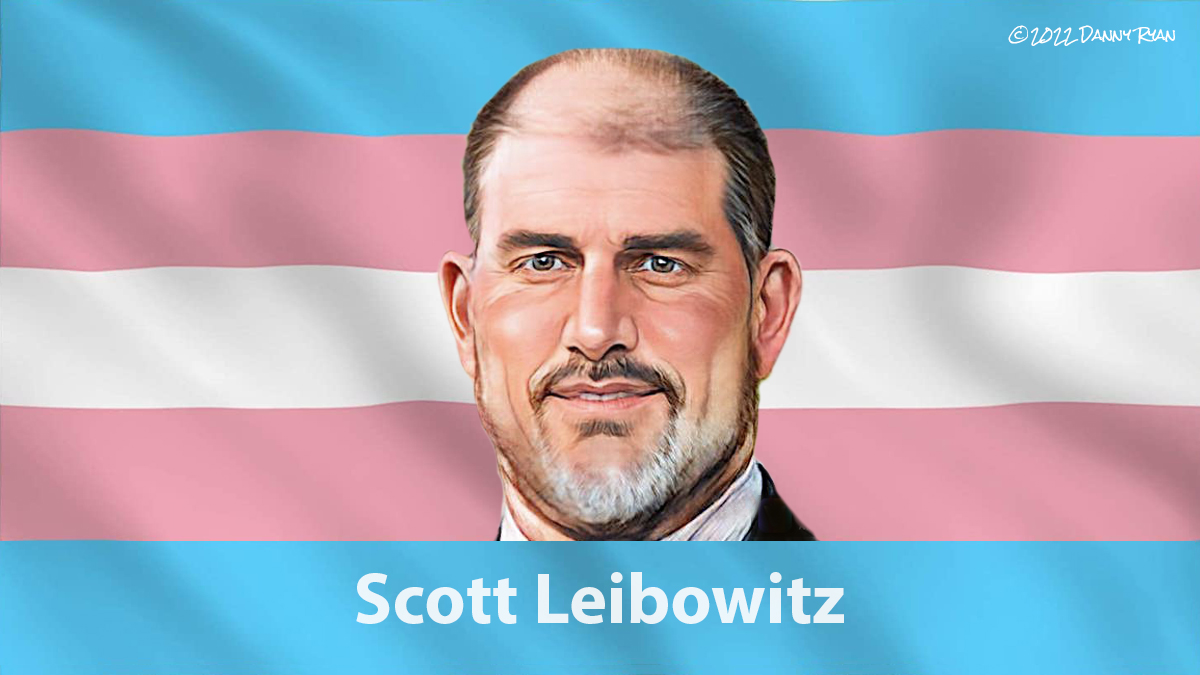
Scott Leibowitz is an American pediatric psychiatrist best known for working with gender diverse youth and with anti-trans journalists.
Like many psychologists and psychiatrists who get paid to do them, Leibowitz promotes “comprehensive psychological assessments,” a form of gatekeeping used for over a century to delay or deny medical transition options for trans and gender diverse people.
Leibowitz is a key source for journalists who feel it has become too easy for adolescents and young adults to get hormones and surgery, covering trans healthcare like an unfolding medical scandal. Leibowitz participated in numerous articles about the ex-transgender movement, most notably pieces by anti-trans activists Jesse Singal in The Atlantic and Emily Bazelon in the New York Times. Those pieces have been cited in proposed legislation banning trans healthcare.
Leibowitz believes that science, medicine, and journalism can somehow be separated from politics. In 2024, despite Leibowitz’s objections, Ohio passed HB 68 banning the care that Leibowitz offers in that state.
Background
Scott Farrell Leibowitz was born on May 20, 1978 in Smithtown, New York. Leibowitz earned a bachelor’s degree from Cornell University and a medical degree from the Tel Aviv University Sackler School of Medicine New York State/American Program. Leibowitz completed residencies at the Zucker Hillside Hospital in Queens and the Albert Einstein College of Medicine’s Long Island Jewish Health System. Leibowitz then did a Fellowship at the children’s gender clinic at Boston Children’s Hospital with colleague Laura Edwards-Leeper. In 2013 Leibowitz took a similar position at the Ann & Robert H. Lurie Children’s Hospital in Chicago. In 2015 Leibowitz was recruited to Nationwide Children’s in Columbus, Ohio.
2018 Atlantic article
Leibowitz was quoted throughout a 2018 Atlantic article by Jesse Singal on the ex-transgender movement. Similar to the ex-gay movement, the people who promote the medicalized concepts of “desistance” and “detransition” believe that interest in gender transition is a disease that can resolve on its own or through medical intervention. Proponents of these loaded terms make several assumptions that are not value-neutral and therefore not scientific.
[Laura] Edwards-Leeper is hoping to promote a concept of affirming care that takes into account the developmental nuances that so often come up in her clinical work. In this effort, she is joined by Scott Leibowitz, a psychiatrist who treats children and adolescents. He is the medical director of behavioral health for the THRIVE program at Nationwide Children’s Hospital, in Columbus. Leibowitz has a long history of working with and supporting TGNC youth—he served as an expert witness for the Department of Justice in 2016, when President Barack Obama’s administration challenged state-level “bathroom bills” that sought to prevent trans people from using the public bathroom associated with their gender identity. Edwards-Leeper and Leibowitz met at Boston Children’s, where Leibowitz did his psychiatry fellowship, and the two have been close friends and collaborators ever since.
While it’s understandable, for historical reasons, why some people associate comprehensive psychological assessments with denial of access to care, that isn’t how Leibowitz and Edwards-Leeper view their approach. Yes, they want to discern whether a patient actually has gender dysphoria. But comprehensive assessments and ongoing mental-health work are also means of ensuring that transitioning—which can be a physically and emotionally taxing process for adolescents even under the best of circumstances—goes smoothly.
[…]
Scott’s assessment process centered mostly on the basic readiness questions Edwards-Leeper and Leibowitz are convinced should be asked of any young person considering hormones.
[…]
But progressive-minded parents can sometimes be a problem for their kids as well. Several of the clinicians I spoke with, including Nate Sharon, Laura Edwards-Leeper, and Scott Leibowitz, recounted new patients’ arriving at their clinics, their parents having already developed detailed plans for them to transition. “I’ve actually had patients with parents pressuring me to recommend their kids start hormones,” Sharon said.
[…]
Leibowitz noted that a relationship with a caring therapist may itself be an important prophylactic against suicidal ideation for TGNC youth: “Often for the first time having a medical or mental-health professional tell them that they are going to take them seriously and really listen to them and hear their story often helps them feel better than they’ve ever felt.”
[…]
“Would you rather have a live daughter or a dead son?” is a common response to such questions. “This type of narrative takes an already fearful parent and makes them even more afraid, which is hardly the type of mind-set one would want a parent to be in when making a complex lifelong decision for their adolescent,” Leibowitz said.
Johanna Olson-Kennedy, a physician who specializes in pediatric and adolescent medicine at Children’s Hospital Los Angeles and who is the medical director of the Center for Transyouth Health and Development, is one of the most sought-out voices on these issues, and has significant differences with Edwards-Leeper and Leibowitz. In “Mental Health Disparities Among Transgender Youth: Rethinking the Role of Professionals,” a 2016 JAMAPediatrics article, she wrote that “establishing a therapeutic relationship entails honesty and a sense of safety that can be compromised if young people believe that what they need and deserve (potentially blockers, hormones, or surgery) can be denied them according to the information they provide to the therapist.”
[…]
Perhaps a first step is to recognize detransitioners and desisters as being on the same “side” as happily transitioned trans people. Members of each of these groups have experienced gender dysphoria at some point, and all have a right to compassionate, comprehensive care, whether or not that includes hormones or surgery. “The detransitioner is probably just as scarred by the system as the transitioner who didn’t have access to transition,” Leibowitz told me. The best way to build a system that fails fewer people is to acknowledge the staggering complexity of gender dysphoria—and to acknowledge just how early we are in the process of understanding it.
2022 New York Times article
In 2022, Leibowitz was the central figure and framing device in an article by Emily Bazelon. Like many journalists, Bazelon was clearly more empathetic to primary source Leibowitz. Bazelon also presents Leibowitz as a “scientist under seige,” a cliché common in journalism about conservative cisgender people involved in transgender research.
The story is about the editing of the WPATH Standards of Care 8 chapter on youth.
Leibowitz, [Annelou] de Vries and their co-authors held their ground on assessments. The final version of their chapter said that because of the limited long-term research, treatment without a comprehensive diagnostic assessment “has no empirical support and therefore carries the risk that the decision to start gender-affirming medical interventions may not be in the long-term best interest of the young person at that time.”
[from original version] In his Atlantic story, Singal also justified his skepticism of letting kids transition by relying heavily on two care providers, Scott Leibowitz and Laura Edwards-Leeper, who believe in the desistance myth, and whom Singal has cited in the past. Despite the fact that their views are shared by few other experts, Singal has suggested in the past that their theory is mainstream.
CORRECTION: An earlier version of this article referenced child and adolescent psychiatrist Scott Leibowitz and his colleague Laura Edwards-Leeper in a context that misrepresented their work. It has been updated to remove reference to them.
Singal, Jesse (July 2018). When a child says she’s trans. The Atlantic https://www.theatlantic.com/magazine/archive/2018/07/when-a-child-says-shes-trans/561749/
Simons LK, Leibowitz SF, Hidalgo MA (2014). Understanding gender variance in children and adolescents. Pediatr Ann. 2014 Jun;43(6):e126-31. https://doi.org/10.3928/00904481-20140522-07
Edwards-Leeper L, Leibowitz SF, Sangganjanavanich VF (2016). Affirmative practice with transgender and gender nonconforming youth: Expanding the model. Psychology of Sexual Orientation and Gender Diversity 3(2):165-172 https://doi.org/10.1037/sgd0000167
Calzo JP, Melchiono M, Richmond TK, Leibowitz SF, Argenal RL, Goncalves A, Pitts S, Gooding HC, Burke P (2017). Lesbian, Gay, Bisexual, and Transgender Adolescent Health: An Interprofessional Case Discussion. MedEdPORTAL. 2017 Aug 9;13:10615. https://doi.org/10.15766/mep_2374-8265.10615
Janssen A, Scott Leibowitz SF, eds. (2018). Affirmative Mental Health Care for Transgender and Gender Diverse Youth: A Clinical Guide. ISBN 9783319783079
The research term for this is desistance. This has become a rather controversial discussion because the studies themselves vary in the populations they included and how they handled the children that were lost to follow up.
Strang JF, Powers MD, Knauss M, Sibarium E, Leibowitz SF, Kenworthy L, Sadikova E, Wyss S, Willing L, Caplan R, Pervez N, Nowak J, Gohari D, Gomez-Lobo V, Call D, Anthony LG (2018). “They Thought It Was an Obsession”: Trajectories and Perspectives of Autistic Transgender and Gender-Diverse Adolescents. J Autism Dev Disord. 2018 Dec;48(12):4039-4055. https://doi.org/10.1007/s10803-018-3723-6
Strang JF, Janssen A, Tishelman A, Leibowitz SF, Kenworthy L, McGuire JK, Edwards-Leeper L, Mazefsky CA, Rofey D, Bascom J, Caplan R, Gomez-Lobo V, Berg D, Zaks Z, Wallace GL, Wimms H, Pine-Twaddell E, Shumer D, Register-Brown K, Sadikova E, Anthony LG (2018). Revisiting the Link: Evidence of the Rates of Autism in Studies of Gender Diverse Individuals. J Am Acad Child Adolesc Psychiatry. 2018 Nov;57(11):885-887. https://doi.org/10.1016/j.jaac.2018.04.023
Leibowitz SF, Lantos JD (2019). Affirming, Balanced, and Comprehensive Care for Transgender Teenagers. Pediatrics. June 2019, 143 (6) e20190995 https://doi.org/10.1542/peds.2019-0995
Exhibit 37: Expert Declaration of Scott F. Leibowitz, MD. United States of America v. State of North Carolina, et al. (2017). No. 1:16-cv-00425 [PDF] https://www.aclu.org/sites/default/files/field_document/de_076-37_-_leibowitz_decl_iso_mot_for_pi_us_07-06-2016.pdf
Leibowitz SF, Telingator C (2012). Assessing gender identity concerns in children and adolescents: evaluation, treatments, and outcomes. Curr Psychiatry Rep. 2012 Apr;14(2):111-20. https://doi.org/10.1007/s11920-012-0259-x
Leibowitz SF, Norman Spack (2011). The development of a gender identity psychosocial clinic: treatment issues, logistical considerations, interdisciplinary cooperation, and future initiatives. Child Adolesc Psychiatr Clin N Am. 2011 Oct;20(4):701-24. https://doi.org/10.1016/j.chc.2011.07.004
Stoddard J, Leibowitz SF, Ton H, Snowdon S (2011). Improving medical education about gender-variant youth and transgender adolescents. Child Adolesc Psychiatr Clin N Am. 2011 Oct;20(4):779-91. https://doi.org/10.1016/j.chc.2011.07.008
Note: In 2025, this site phased out AI illustrations after artist feedback. The previous illustration is here.
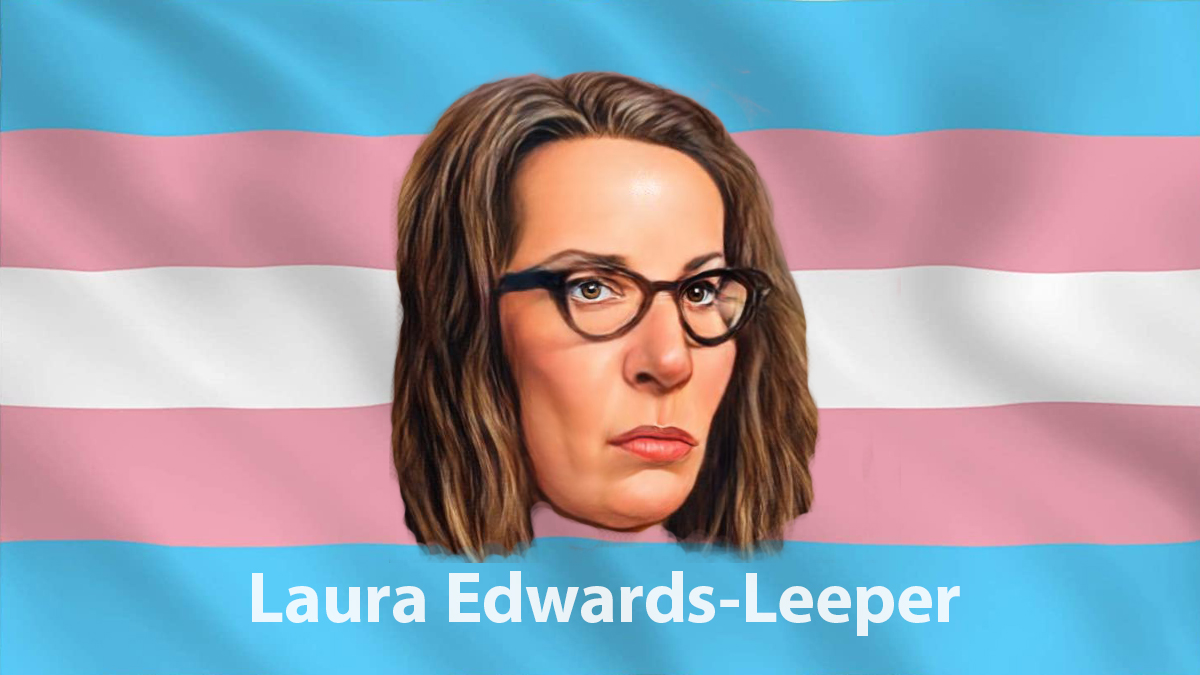
Laura Edwards-Leeper is a conservative American psychologist best known for working with gender diverse youth. Edwards-Leeper has become a favored source for journalists promoting the ex-transgender movement and a leading voice in a faction of therapists who have “concerns” that affirmative models of care for trans youth do not have enough gatekeeping. Edwards-Leeper believes trans people and their families should pay someone like her before getting access to medical transition options.
Background
Laura Ann Edwards-Leeper was born on January 18, 1975. Edwards-Leeper earned a bachelor’s degree from Lewis & Clark College in 1997, then attended Bowling Green State University, earning a graduate certificate in 2003 and a doctorate in 2004. Edwards-Leeper did internships through Montana State University, Bozeman at Crow/Northern Cheyenne Hospital and through Cambridge Health Alliance/Harvard Medical School.
Edwards-Leeper is married to Todd Steven Edwards-Leeper (born 1973).
Transgender youth
Edwards-Leeper worked closely with endocrinologist Norman Spack at Boston Children’s Hospital. Spack is an innovator in offering medical options to gender diverse youth, founding the Gender Management Service (GeMS) there in 2007. Edwards-Leeper and Spack co-authored several articles through 2012, when Edwards-Leeper left GeMs for a similar role at Seattle Children’s Hospital. After a year, Edwards-Leeper went into private practice.
After 2012, Edwards-Leeper began publishing on the correlation between neurodiversity and gender diversity.
2018 Atlantic article
Edwards-Leeper was quoted throughout a 2018 Atlantic article by Jesse Singal on the ex-transgender movement. Similar to the ex-gay movement, the people who promote the medicalized concepts of “desistance” and “detransition” believe that being trans is a disease that can resolve on it own or through medical intervention. Proponents of these loaded terms make several assumptions that are not value-neutral and therefore not scientific.
Singal presents Edwards-Leeper and fellow clinicians Erica Anderson and Dianne Berg as therapists who have “concerns” that more affirming care for minors may lead to negative transition outcomes. Edwards-Leeper’s assessment methods had led to a controversial reputation, Critics reportedly “nearly threw things” at Edwards-Leeper at conferences:
Those conference troubles signaled to Edwards-Leeper that her field had shifted in ways she found discomfiting. At one conference a few years ago, she recalled, a co-panelist who was a well-respected clinician in her field said that Edwards-Leeper’s comprehensive assessments required kids to “jump through more fiery hoops” and were “retraumatizing.” This prompted a standing ovation from the audience, mostly families of TGNC young people. During another panel discussion, at the same conference with the same clinician, but this time geared toward fellow clinicians, the same thing happened: more claims that assessments were traumatizing, more raucous applause.
Edwards-Leeper isn’t alone in worrying that the field is straying from its own established best practices. “Under the motivation to be supportive and to be affirming and to be nonstigmatizing, I think the pendulum has swung so far that now we’re maybe not looking as critically at the issues as we should be,” the National Center for Gender Spectrum Health’s Dianne Berg told me. Erica Anderson, the UCSF clinician, expressed similar concerns: “Some of the stories we’ve heard about detransitioning, I fear, are related to people who hastily embarked on medical interventions and decided that they weren’t for them, and didn’t thoroughly vet their decision either by themselves or with professional people who could help them.”
Singal (2018)
Via Jenny Cyphers, an activist in the ex-trans movement:
Two of the most important aspects of my family’s experience that are not adequately addressed in the Atlantic article, are: 1) my daughter was given a clinical diagnosis of gender dysphoria, so she was just as “truly trans” as the next kid, and 2) it was my insistence that my child wait to medically transition, not her therapist’s. My teen’s therapist, Laura Edwards-Leeper, listened to me and agreed. We were lucky. While there are some cautious, thoughtful providers, the current situation in the US is that there is also no oversight. The most vocal professionals are firmly in the affirmation camp which believes, without any long-term data to validate, that withholding hormonal interventions is tantamount to abuse.
2021 60 Minutes segment
Edwards-Leeper appeared on a 60 Minutes segment about the ex-transgender movement and was presented as a practitioner of “comprehensive assessment” in a way that suggested some colleagues were not doing this. When CBS’s Lesley Stahl asked about “this whole area of accepting what young people are saying too readily,” Edwards-Leeper said:
Yes, everyone is very scared to speak up because we’re afraid of not being seen as affirming or supportive of these young people or doing something to hurt the trans community. But even some of the providers are trans themselves and share these concerns.
This is a reference to conservative trans therapist Erica Anderson, who also appeared in the segment.
2021 Washington Post op-ed
Edwards-Leeper again joined fellow conservative clinician Erica Anderson to denounce what they consider insufficient gatekeeping in healthcare for trans and gender diverse youth.
In response, DC-area parents Rachel Cornwell and Liz Matthews wrote:
As parents of transgender youths, we are deeply concerned by Laura Edwards-Leeper and Erica Anderson’s Nov. 28 Outlook essay, “The mental health establishment is failing trans kids.” Though we agree with their conclusion that improvements in care for gender-diverse youths are needed, their alarmist concerns about insufficient psychological evaluations for gender-affirming care are unfounded and sensationalized.
The writers based their opinion on anecdotal experiences and even admitted that “providers and their behavior haven’t been closely studied.” They pointed to a single study of an extremely small number of people who have detransitioned to support their argument in favor of delaying or even denying gender-affirming medical care to gender-diverse youths. They recklessly conflate safe, reversible medical interventions such as hormone blockers with more permanent gender-confirmation treatments such as surgeries, which are typically not performed on minors in the United States. And they dangerously play down the risk of suicide that can result from denying gender-affirming care.
Thousands of trans youths are now thriving because of gender-affirming care. Thankfully, our children are among that number because of the intervention of mental health providers and physicians, as well as the support of our communities. Trans kids need all the support they can get because they live in a world that too often denies and degrades them. That is why it’s such a shame that the authors would increase barriers to accessing gender-affirming care, rather than expand access for all who need it.
Clinician AJ Eckert, who was identified in the piece, wrote:
The essay misrepresented gender-affirming care, which is nuanced, complex and comprehensive. The writers mischaracterized transgender youths and pushed a damaging pseudoscientific narrative that serves to further limit health care for an already underserved, marginalized and vulnerable population. The writers leaned on the World Professional Association for Transgender Health’s standards of care but failed to note that the standards acknowledge the damaging and irreversible consequences of an incongruent puberty, reject the stereotype of trans psychopathology and include harm-reduction strategies.
Contrary to the anti-trans arguments spread throughout mass media and repeated by the writers, research shows that detransition and regret are rare, trans youth suicide rates are alarmingly high, and trans children supported in their identities have better mental health outcomes. One of their most egregious lies was that those opposed to gender-affirming care are being silenced. This article was proof that isn’t true.
Trans children deserve love, support and thoughtful medical care as much as cisgender children do. Pieces such as this are responsible for the closure of gender clinics, anti-trans sentiment and the spate of laws and regulations targeting trans youths.
Strang JF, McClellan LS, Raaijmakers D, Caplan R, Klomp SE, Reutter M, Lai MC, Song M, Gratton FV, Dale LK, Schutte A, de Vries ALC, Gardiner F, Edwards-Leeper L, Minnaard AL, Eleveld NL, Corbin E, Purkis Y, Lawson W, Kim DY, van Wieringen IM, Rodríguez-Roldán VM, Harris MC, Wilks MF, Abraham G, Balleur-van Rijn A, Brown LXZ, Forshaw A, Wilks GB, Griffin AD, Graham EK, Krause S, Pervez N, Bok IA, Song A, Fischbach AL, van der Miesen AIR (2023). The Gender-Diversity and Autism Questionnaire: A Community-Developed Clinical, Research, and Self-Advocacy Tool for Autistic Transgender and Gender-Diverse Young Adults. Autism Adulthood. 2023 Jun 1;5(2):175-190. https://doi.org/10.1089/aut.2023.0002
Coleman E, Radix AE, Bouman WP, Brown GR, de Vries ALC, Deutsch MB, Ettner R, Fraser L, Goodman M, Green J, Hancock AB, Johnson TW, Karasic DH, Knudson GA, Leibowitz SF, Meyer-Bahlburg HFL, Monstrey SJ, Motmans J, Nahata L, Nieder TO, Reisner SL, Richards C, Schechter LS, Tangpricha V, Tishelman AC, Van Trotsenburg MAA, Winter S, Ducheny K, Adams NJ, Adrián TM, Allen LR, Azul D, Bagga H, Başar K, Bathory DS, Belinky JJ, Berg DR, Berli JU, Bluebond-Langner RO, Bouman MB, Bowers ML, Brassard PJ, Byrne J, Capitán L, Cargill CJ, Carswell JM, Chang SC, Chelvakumar G, Corneil T, Dalke KB, De Cuypere G, de Vries E, Den Heijer M, Devor AH, Dhejne C, D’Marco A, Edmiston EK, Edwards-Leeper L, Ehrbar R, Ehrensaft D, Eisfeld J, Elaut E, Erickson-Schroth L, Feldman JL, Fisher AD, Garcia MM, Gijs L, Green SE, Hall BP, Hardy TLD, Irwig MS, Jacobs LA, Janssen AC, Johnson K, Klink DT, Kreukels BPC, Kuper LE, Kvach EJ, Malouf MA, Massey R, Mazur T, McLachlan C, Morrison SD, Mosser SW, Neira PM, Nygren U, Oates JM, Obedin-Maliver J, Pagkalos G, Patton J, Phanuphak N, Rachlin K, Reed T, Rider GN, Ristori J, Robbins-Cherry S, Roberts SA, Rodriguez-Wallberg KA, Rosenthal SM, Sabir K, Safer JD, Scheim A… (2022). Standards of Care for the Health of Transgender and Gender Diverse People, Version 8. Int J Transgend Health. 2022 Sep 6;23(Suppl 1):S1-S259. https://doi.org/10.1080/26895269.2022.2100644
Spivey LA, Edwards-Leeper L (2019). Future Directions in Affirmative Psychological Interventions with Transgender Children and Adolescents. J Clin Child Adolesc Psychol. 2019 Mar-Apr;48(2):343-356. https://doi.org/10.1080/15374416.2018.1534207
Strang JF, Janssen A, Tishelman A, Leibowitz SF, Kenworthy L, McGuire JK, Edwards-Leeper L, Mazefsky CA, Rofey D, Bascom J, Caplan R, Gomez-Lobo V, Berg D, Zaks Z, Wallace GL, Wimms H, Pine-Twaddell E, Shumer D, Register-Brown K, Sadikova E, Anthony LG (2018). Revisiting the Link: Evidence of the Rates of Autism in Studies of Gender Diverse Individuals. J Am Acad Child Adolesc Psychiatry. 2018 Nov;57(11):885-887. https://doi.org/10.1016/j.jaac.2018.04.023
Chen D, Edwards-Leeper L, Stancin T, Tishelman A. Advancing the Practice of Pediatric Psychology with Transgender Youth: State of the Science (2018), Ongoing Controversies, and Future Directions. Clin Pract Pediatr Psychol. 2018 Mar;6(1):73-83. https://doi.org/10.1037/cpp0000229
Strang JF, Meagher H, Kenworthy L, de Vries ALC, Menvielle E, Leibowitz S, Janssen A, Cohen-Kettenis P, Shumer DE, Edwards-Leeper L, Pleak RR, Spack N, Karasic DH, Schreier H, Balleur A, Tishelman A, Ehrensaft D, Rodnan L, Kuschner ES, Mandel F, Caretto A, Lewis HC, Anthony LG (2018). Initial Clinical Guidelines for Co-Occurring Autism Spectrum Disorder and Gender Dysphoria or Incongruence in Adolescents. J Clin Child Adolesc Psychol. 2018 Jan-Feb;47(1):105-115. https://doi.org/10.1080/15374416.2016.1228462
Shumer DE, Reisner SL, Edwards-Leeper L, Tishelman A (2016). Evaluation of Asperger Syndrome in Youth Presenting to a Gender Dysphoria Clinic. LGBT Health. 2016 Oct;3(5):387-90. https://doi.org/10.1089/lgbt.2015.0070
Tishelman AC, Kaufman R, Edwards-Leeper L, Mandel FH, Shumer DE, Spack NP (2015). Serving Transgender Youth: Challenges, Dilemmas and Clinical Examples. Prof Psychol Res Pr. 2015;46(1):37-45. https://doi.org/10.1037/a0037490
Tishelman AC, Kaufman R, Edwards-Leeper L, Mandel FH, Shumer DE, Spack NP (2015). Reply to comment on “Serving Transgender Youth: Challenges, Dilemmas, and Clinical Examples” by Tishelman et al. (2015). Prof Psychol Res Pr. 2015 Aug;46(4):307. https://doi.org/10.1037/pro0000029
Children and adolescents with gender identity disorder referred to a pediatric medical center. Spack NP, Edwards-Leeper L, Feldman HA, Leibowitz S, Mandel F, Diamond DA, Vance SR. Pediatrics. 2012 Mar;129(3):418-25. https://doi.org/10.1542/peds.2011-0907
Edwards-Leeper L, Spack NP (2012). Psychological evaluation and medical treatment of transgender youth in an interdisciplinary “Gender Management Service” (GeMS) in a major pediatric center. Journal of Homosexuality, 59 (3), 321-336. https://doi.org/10.1080/00918369.2012.653302
Spack NP, Edwards-Leeper L, Feldman HA, Leibowitz S, Mandel F, Diamond DA, Vance SR (2012). Children and adolescents with gender identity disorder referred to a pediatric medical center. Pediatrics, 129 (3), 418-425. https://doi.org/10.1542/peds.2011-0907
Edwards-Leeper L, Spack NP (2012). Psychological Evaluation and Medical Treatment of Transgender Youth in an Interdisciplinary “Gender Management Service” (GeMS) in a Major Pediatric Center. Journal of Homosexuality 59(3):321-36. https://doi.org/10.1080/00918369.2012.653302
Spack NP, Edwards-Leeper L (2011). Medical treatment of the transgender adolescent. In Fisher M, Alderman E, Kreipe R, Rosenfeld W (Eds). Textbook of Adolescent Health Care. American Academy of Pediatrics, ISBN 9781581102697
Edwards-Leeper L, Spack NP (2011). Gender identity disorder. In Augustyn M, Zuckerman B, Caronna EB (Eds.), The Zuckerman Parker Handbook of Developmental and Behavioral Pediatrics for Primary Care (3rd ed., pp. 229-233). Wolters Kluwer Health/Lippincott Williams & Wilkins. ISBN 978-1608319145
Note: In 2025, this site phased out AI illustrations after artist feedback. The previous illustration is here.
Rya Jones is an American former publishing executive who has espoused conservative transgender views. Jones posted many videos expressing conservative or religious views about gender, many of which were later deleted.
Background
Rya Jones was born on June 24, 1974. Jones graduated from high school in 1992, then earned a bachelor’s degree from University of Wisconsin-Madison in 1996. Jones served as CEO of Jones Publishing, Inc. It was founded by Jones’ parents in 1986 and has produced a number of specialty periodicals:
Religious (via Crosslife LLC): Today’s Christian Living, Today’s Pastor
Arts and crafts: Sunshine Artist, Dolls, Doll Costuming, Doll Crafter, Dollmaking, Popular Ceramics, Ceramics Arts and Craft, Teddy Bear Review
Jones transitioned in around 2015. Jones’ time as CEO ended in 2016. In 2017, JP Media LLC purchased Jones Publishing, Inc. in a planned transfer of the company from Joe and Maggie Jones to Diana Jones, Rya Jones’ former spouse. Rya and Diana Jones had seven children who were home-schooled. Jones has served as an ordained pastor in Cornerstone Churches in Wisconsin and studied part-time for a Master’s in Divinity at Trinity Evangelical Divinity School. Jones now identifies as a “former pastor.” Jones has been involved with Madison Community Cooperative and has been licensed as a health insurance agent with Humana.
Online activity
Jones uses several online handles, including:
Rya N.T. Jones
HeyThisIsRya
In around 2017, Jones published a number of videos on YouTube about various gender-critical topics including a possible “detransition” before removing all of the videos. One video, titled “I am an autogynephile,” led to Jones being listed on this site as an autogynephilia activist. Jones claimed in the 2025 statement below that the provocative title was to generate engagement and was not a statement of identity.
Starting in September 2022, Rya Jones and parent Joe Jones produced dozens of episodes of a podcast titled TranDescendant.
Statement from Rya Jones
In June 2025. Jones sent the following statement for publication on this profile:
I am not, nor have I have I ever been, an “Autogynephilia activist.” On November 3, 2017, I published a video arguing that gatekeeping in the transgender community needed to stop. I told the story of my interaction with a straight trans woman who told me I was not really trans because I am attracted to women instead of men. I then made the point that some people that call my condition autogynephilia in order to marginalize us. The point I intended to make was that, no matter what you choose to call me, it does not make me less authentically-trans. The thumbnail had a picture of me with the phrase, “Not Trans Enough.”
But then almost as an afterthought, I titled it “I am an autogynephile.” I knew that YouTube likes controversy, and that using such a title would almost certainly get more views. Once people saw the video, I reasoned, they would hear my argument and stop belittling women like me. That was almost certainly the wrong decision, because nearly everyone, from transphobes to trans people, took the title at face value. Ironically, some people used it as an admission that I was not really trans after all.
It didn’t help that I posted some similarly provocative videos, including one where I talked about challenging gender norms by “detransitioning” but continuing to present female. I regretted the idea almost instantly after I published the video. I used my very next video to explain why I was wrong. Some commenters accused me of broadcasting internalized transphobia on that channel. I did my best not to do so. Looking back, they were probably right. I don’t think I ever described myself as Gender Critical, but I was certainly trying to engage a Gender Critical audience in order to change their minds. When I realized that approach was never going to work, I quit the channel.
To those I hurt with my words, I am sincerely sorry. I cannot change that I said those things. But I did unpublish the channel years ago. I reject Ray Blanchard’s widely-rejected hypothesis of autogynephelia. And I most certainly would NEVER describe myself as a “man trapped in a man’s body.” If there’s anything more I can do to right the wrongs I may have caused, please email me at rya dot nt dot jones at gmail.
Miranda Yardley and Rya Jones (July 12, 2017). ‘TERF’ and ‘Cis’: Misogyny and Homophobia in Transgender Culture. https://www.youtube.com/watch?v=AUP2csDBG-E [deleted]
Why I Didn’t Realize I was Transgender for Most of My Life
https://www.youtube.com/watch?v=7oyc_Aq4llI
A Transgender Woman Talks About the Pressures of Gender Conformity
https://www.youtube.com/watch?v=Dn_Wo5NzRo4
WHAT I’M TRYING TO DO WITH THIS CHANNEL | A chat with Rya
https://www.youtube.com/watch?v=MakFBxmD7aY
DO OUR OPPRESSORS DESERVE TO HAVE US LISTEN TO THEM? | A Thougtful Response to Riley J. Dennis
https://www.youtube.com/watch?v=5gDgEz6BAOc
ARE TRANSGENDER PEOPLE POSSESSED? | A Chat with Rya
https://www.youtube.com/watch?v=fMzsv8ab4W8
WHEN YOUR DAD GOES FROM FUNDAMENTALIST TO TRANSGENDER | A Chat with Rya
https://www.youtube.com/watch?v=L96esw36h8Q
HOW TO OVERCOME THE COTTON CEILING | A Transgender Response to Arielle Scarcella
https://www.youtube.com/watch?v=b_VXfZE0Hg8
Are Trans Women Biologically Male?
https://www.youtube.com/watch?v=wXHeifREMbA
THE TRUTH ABOUT TERFS | A Chat with Rya
https://www.youtube.com/watch?v=xrOudAt-yUs
WHAT MAKES SOMEONE A WOMAN? | A Chat With Rya
https://www.youtube.com/watch?v=CaXbqvYU5iQ
STOP CALLING PEOPLE TERFS! | A Chat with Rya
https://www.youtube.com/watch?v=JGUBfoTAJ5Y
IS IT OKAY TO HAVE WOMEN-ONLY SPACES THAT EXCLUDE TRANS WOMEN? | A Chat with Rya
https://www.youtube.com/watch?v=SB-R3o5fQ0w
WHY AREN’T TRANS FOLKS LISTENING?! | A Chat with Rya
https://www.youtube.com/watch?v=FDM92WgrmI0
FIRST KISS AT THE ALTAR | A Chat with Rya
https://www.youtube.com/watch?v=DnU6DdxjwKo
GENDER IS A SOCIAL CONSTRUCT | A Chat with Rya
https://www.youtube.com/watch?v=giAOLuibmNg
I’M A TRANSGENDER TERF? | A Chat with Rya
https://www.youtube.com/watch?v=fY_8SWBUvoc
ARE TRANSWOMEN WOMEN? | A Chat with Miranda Yardley
https://www.youtube.com/watch?v=PyUNuD8WUSY
CAN A TRANS PERSON HIT PEAK TRANS? | A Chat with Rya
https://www.youtube.com/watch?v=4ggX-lvgErc
People are FREAKING OUT about Miranda Yardley’s Attack on Transgenderism
https://www.youtube.com/watch?v=YPi021G9lls
WHY I ADORE RILEY J. DENNIS, YOUTUBE’S MOST HATED TRANS PERSON | A Chat With Rya
https://www.youtube.com/watch?v=fNs8A4pAIoY
WELL THIS WAS A HUGE LET DOWN | A Chat with Rya
https://www.youtube.com/watch?v=ioJsfXLbDs4
DOES THE BIBLE CONDEMN HOMOSEXUALITY? | A Chat with Rya
https://www.youtube.com/watch?v=1h9d8OC7KZQ
‘TERFS’ DON’T HATE TRANS PEOPLE! | A Chat with Rya
https://www.youtube.com/watch?v=YtOKFUe7JBg
I DEBATE MY FUNDAMENTALIST SELF FROM 17 YEARS AGO | A Chat With Rya
https://www.youtube.com/watch?v=fcMSZEIekW8
DO RADICAL FEMINISTS HATE TRANSPEOPLE? | A Chat with Rya
https://www.youtube.com/watch?v=Pf-jVhZdJEg
I AM AN AUTOGYNEPHILE | A Chat with Rya
https://www.youtube.com/watch?v=ferdf6iRTOg
WARNING: TRANS LEGISLATION IS DANGEROUS (But Not for the Reason You Think) | A Chat with Rya
https://www.youtube.com/watch?v=k0WLFOLO7vE
A FEMINIST RESPONSE TO THE CURRENT STATE OF THE TRANS MOVEMENT | A Chat with Rya
https://www.youtube.com/watch?v=U_oKPUZxEBA
ARE TRANSWOMEN WOMEN? | A Battle to the Death Between Rya Jones and Miranda Yardley
https://www.youtube.com/watch?v=NmwlQLBfknE
TERFS | A response to ContraPoints
https://www.youtube.com/watch?v=Wh0E_gM_Sf4
HAS THERYN MEYER LOST IT? | A Chat with Rya
https://www.youtube.com/watch?v=CVrm96aX4NE
RESPONDING TO TROLLS | A Chat With Rya
https://www.youtube.com/watch?v=sWgsWCNaG40
I’m Sick of Being a TERF | A Chat with Rya
https://www.youtube.com/watch?v=0evnXBNjqVI
I MIGHT DE-TRANSITION (Not Clickbait) | A Chat with Rya
https://www.youtube.com/watch?v=aRpxHA7p9wQ
MY DECISION ABOUT DE-TRANSITIONING | A Chat With Rya
https://www.youtube.com/watch?v=ZcqpJY-W7p0
YOUR GENITAL PREFERENCES MAKE JESUS CRY | A Response to Ash Hardell and Arielle Scarcella
https://www.youtube.com/watch?v=QP0xkAG4bOA
I’M SO SICK OF THIS!!! | A Rant from Rya
https://www.youtube.com/watch?v=7rtkPYyHyzI
10 BOOKS THAT WILL CHANGE YOUR LIFE | A Chat with Rya
https://www.youtube.com/watch?v=GFwDYRzir6Q
WE NEED TO TALK ABOUT SKYLAR BAKER-JORDAN
https://www.youtube.com/watch?v=SvUe7cUVk0Y
WE NEED TO TALK ABOUT MY MELTDOWN LAST WEEK | A Chat with Rya
https://www.youtube.com/watch?v=2dZcsIhWQ5Y
DO TRANS WOMEN HAVE FEMALE BRAINS? | A Chat with Rya
https://www.youtube.com/watch?v=ciAFCe6V0sU
AESTHETICS ARE OVERRATED | A Response to Contrapoints
https://www.youtube.com/watch?v=lTbjiWA-Gz4
Howard Wilbur Jones, Jr. (December 30, 1910 – July 31, 2015) was an American gynecologist and surgeon. He performed sex reassignment surgeries at Johns Hopkins University.
Background
Jones earned a bachelor’s degree from Amherst College in 1931 and a medical degree from Johns Hopkins School of Medicine in 1935, then completed his surgery residency there. He led a U.S. Army Auxiliary Surgical Group during World War II, after which he completed a gynecology residency. Jones was a colleague of surgeon Milton Edgerton.
Jones made many important innovations in cancer and fertility research, first at Johns Hopkins and later at Eastern Virginia Medical School.
Genital surgeries
Jones performed “normalizing” surgeries on infants with differences of sex development on the recommendation of John Money, including vaginoplasty for David Reimer at age 22 months in 1967. Money fabricated the outcome of Reimer’s social adjustment, and Reimer eventually killed himself at age 38.
Jones also performed surgeries on adults. Confirmed patients include:
Phyllis Avon Wilson (~1965)
Dawn Langley Hall (1968)
Transgender hoaxer Kiira Triea/Denise Magner also claimed to have surgery from Jones at age 14, but there is no evidence that this is true.
2009 GP with Special Interest in Mental Health accreditation
2004 PhD, University of London, Health Services Research
1996 Masters in Public Health (MPH), University of Birmingham
1992-1993 MRCGP, Oxford (Banbury) Vocational Training Scheme
1985-1988 M.B. B.Ch. (Cambridge), The Royal London Hospital Medical College,
1982-1985 B.A. (Hons) Medical Sciences Degree (2:1), Queens’ College, Cambridge University
2018 Guardian letter
Byng was a signatory on a letter in The Guardian critical of the Gender Recognition Act. The open letter included many other key anti-transgender extremists.
2019 Standing For Women anti-transgender event
In 2019 Byng spoke at an anti-trans event organized by Standing for Women titled First Do No Harm – the ethics of transgender healthcare
On April 25, 2022, anti-trans organization Society for Evidence-Based Gender Medicine (SEGM) arranged a meeting with US government officials on healthcare for trans and gender diverse youth. Byng was listed as a participant.
2024 CAN-SG anti-transgender event
The Clinical Advisory Network on Sex and Gender (CAN-SG) is an anti-transgender front group that promotes restrictions on healthcare. According to program notes: “Richard will talk about how current care for 17-25 year olds could be changed to reflect evidence and professional standards of practice.”
References
Written evidence submitted by Professor Richard Byng [GRA1913] https://committees.parliament.uk/writtenevidence/18099/pdf/
Written submission from Dr Richard Byng, et al (HSC0091) -https://committees.parliament.uk/writtenevidence/103342/html/
Joseph Ladapo is a Nigerian-American physician who was a key figure in banning trans youth healthcare in Florida.
Background
Joseph Abiodun Ladapo was born on December 16, 1978 in Nigeria. At age 5, Ladapo and family moved to the Uniter States.
Ladapo earned a bachelor’s degree from Wake Forest University in 2000, then attended Harvard, earning a medical degree and a doctorate. After working in New York City, Ladapo was appointed a tenured professor at UCLA.
During the COVID pandemic, Ladapo became known among convervatives for views on vaccines and other protocols. In 2021, Ladapo was appointed Surgeon General of Florida by Governor Ron DeSantis.
Anti-transgender activism
Ladapo has carried out anti-trans policies promoted by DeSantis, most notably SB 254, a law prohibiting gender-affirming medical treatment for minors and restricting access to care for trans adults.
Transgender Floridians brought Doe v. Ladapo to challenge this law.
Via Zinnia Jones:
We now know that the state was covertly assisted in this effort by the leadership of the anti-trans group Genspect, Child & Parental Rights Campaign lawyer Vernadette Broyles, and Riittakerttu Kaltiala of Finland’s Tampere University youth gender clinic; Hilary Cass of NHS England’s Cass Review also privately expressed an interest in the sham report against gender-affirming care commissioned by Florida’s AHCA. Several individuals worked behind the scenes with Patrick Hunter, a leading member of the anti-trans Society for Evidence-based Gender Medicine (SEGM). After being appointed by Governor Ron DeSantis to the Board of Medicine, Hunter arranged for extensive anti-trans testimony from SEGM associates to be submitted to the Boards of Medicine and Osteopathy.
Ladapo has also appeared on a number of anti-trans platforms, including Tim Pool, Megyn Kelly, Glenn Beck, Epoch Times, Newsmax, Dennis Prager, Charlie Kirk, and Debra Soh.
References
Doe v. Ladapo (4:23-cv-00114) District Court, N.D. Florida https://www.courtlistener.com/docket/67082532/doe-v-ladapo/
Riley, John (December 27, 2023). DeSantis Spread Misinformation to Limit Trans Health Care, Judge Says. MetroWeekly https://www.metroweekly.com/2023/12/desantis-spread-misinformation-to-limit-trans-health-care-judge-says/
Alfonseca, Kiara (March 23, 2023). Florida parents file lawsuit against state transgender youth care ban. ABC News https://abcnews.go.com/US/florida-parents-file-lawsuit-state-transgender-youth-care/story?id=98086864
Kendra Blewitt is an American writer, amateur tennis player, and “autogynephilia” activist.
Background
Kendra Susan Blewitt was born in August 1945. Blewitt lives in San Francisco and lists as occupation independent writing and editing professional. Blewitt got a bachelor’s degree in philosophy from UICC in 1974.
I corresponded with Kendra in 2003. Kendra talks about time living “as Kendra” as well as her time living “as Ken.”
I am thankful to Kendra for sharing this letter about why psychologist and “autogynephilia” activist J. Michael Bailey is not offensive– Blewitt agrees with Bailey’s model that “transsexuals” may have a form of deviancy. As Kendra notes, “If you turn out deviant, say, homosexual or paraphilic, that is a fact of your existence that you must learn to live with.”
Let me state a couple of things about myself at the onset: (1) I am post-op. I was approved for SRS in April, 2002 by a well-known and very experienced gender therapist, Dr. Barbara Anderson; and I had the surgery done by Dr. Preecha last August. (2) I am autogynephilic. I never claimed to be a woman trapped in a man’s body to Dr. Anderson. I told her I wanted SRS because I had a condition of the sex drive, namely autogynephilia.
Because I was completely inexperienced at dressing and did not know anyone in the TG community when I showed up in San Francisco to start my year of RLE under Dr. Anderson, she had me go to TG support groups in order to meet the people of the group. For a year I went to two support groups every week > one in SF and one in Berkeley.
The people in the SF group were “indigent” types — mostly girls on SSI for mental problems, and prostitutes. The people at the Berkeley group mostly had jobs. In the course of attending these two support groups for a year I came to know pretty much the whole spectrum of types of the TG group — everything from the “gender-fucked” bearded man who liked to go out in public in a short skirt and nylon stockings (he was a very nice man, by the way), to very passable TS women who mostly lived in stealth, to queens who worked the street.
I am sure I don’t know the group as well as you, Andrea, since I’ve only been Kendra for a couple of years. But I do have some experience in this regard.
Since I’ve been in SF I have also acquired some experience with the gay group. I have an apartment at Geary and Leavenworth. My neighborhood used to be very gay until the AIDS epidemic hit, and there still are a lot of gay men in this neighborhood.
There used to be several gay bars and also a queen bar named the Black Rose in my neighborhood. Now there is only one gay bar — the Hob Nob Lounge. It has been in existence for 27 years, I have been told. It is right across the street from my apartment. I go there all the time — I am a regular there.
The men at the Hob Nob are mostly older men who have lived in SF for many years. As older men are prone to do, especially when they’ve been drinking, the men in this bar reminisce about their lives a lot. I have learned a good deal about gay men from the many hours I’ve spent in this bar.
Now then, I have not encountered anything in Dr. Bailey’s book that contradicts the experiences I’ve had with either the TG group or the gay group.
Regarding the autogynephilia theory, I fail to understand your hostility toward it. You obviously feel that it invalidates TS women or sullies their reputation. I do not understand why you feel this way.
I have said that I became sex changed because I was afflicted with the autogynephilia condition. Let me explain how I have justified this action.
I think there is much more to a sex drive than the erotic desires and pleasures it gives rise to. I think it is a powerful force that is active within you at all times, not just when you are aroused. It is like a river that flows in your consciousness. And at every moment, and in every activity, you are either swimming, as it were, along with the current of this river within you, or you are swimming against the current of this river. Either the current of the river is propelling you forward or you are expending energy opposing it, that is.
Now there is nothing you can do to change the kind of sex drive that you have. The sex drive assumes its form during the teen years, or earlier, and once it has assumed its form there is no changing it. If you turn out deviant, say, homosexual or paraphilic that is a fact of your existence that you must learn to live with.
Thus, if you are autogynephilic that is how the river that flows within you is. And you are confronted with an existential decision. You must either live your life swimming against the current of the river that your autogynephilia is, i.e., you must oppress it. Or else you must go with it — you must swim with the current behind you.
To conclude, I did not choose to undergo sexual reassignment surgery because I sought sexual gratification — I did this because I sought a better life.
Finally, it would seem that my choice has worked out well for me. My Mom and sister have twice come out to SF (from the Chicago area) to see me, and they are of the opinion that I am much happier as Kendra than I was as Ken.
I believe that my therapist, Dr. Anderson, considers my transition to be a success story.
It is true that I am happy as Kendra. I do not think I was unhappy as Ken, but I like my life as Kendra very much and I am sure I shall never regret my decision.
Sincerely, Kendra Susan Blewitt
P.S. I am sending a copy of this letter to Dr. Bailey.
Additional materials (8 May 2003)
Dear Andrea, I would like to add something to my Kendra-Letter. I have sent two e-mails to Dr. Bailey that I would like to add, along with some general comments. Very often I hesitate to call myself a transsexual to other transsexuals because I know they will deny that I am a transsexual. I am not one to barge into places where I feel unwelcome, and very often I do feel unwelcome in transsexual circles. Very often I am made to feel like an intruder by transsexuals when I refer to myself as a transsexual. The general public treats me with much more respect than the transsexual group does. I don’t get called a man in a dress very often when I am interacting with ordinary people. I get called a man in a dress routinely when I am interacting with transsexuals. That is what I am to many, if not to most of them — a man in a dress. Up the line we autogynephilic transsexuals are going to have to form a group of our own. The present situation is intolerable for us. We are made to feel like freaks or perverts by what should be our own people more than by anyone else. We need a group that we can belong to as equal, full-fledged members. We need to belong to a group where we can feel proud to be what we are. Belonging to a group where we are “false transsexuals” is beneath our dignity and is even unhealthy for us. We need a group of our own. I know that unity is in our general interest as transsexuals. We are being discriminated against in the workplace. This is a big problem. There are other problems that we all have in common as transsexuals. But what do we autogynephilic transsexuals have in common with anyone? What we need more than anything else right now is a sense of identity. We need that more than we need fair play in the workplace.
First Letter to Dr. Bailey:
Dear Dr. Bailey,
I think the cause of all the hostility directed toward you and your book by so many transsexuals is that they cannot bear the truth. They have not built their houses of the sense of self on the bedrock of knowledge but on the sandy soil of mere belief, and now the earth is shaking and their houses are falling down — their sense of self is breaking apart and they are experiencing the pain of deep insecurity.
I do not think Dr. Benjamin was acting completely as a scientist when he drew a sharp distinction between a cross-dresser (“transvestic fetishist”) and a transsexual. I think the man was a friend to transsexuals. I think he sympathized with them and wanted to give them some legitimacy in the medical field as well as in the general public’s opinion. And he was smart enough to realize that this could not be done if sex in the sense of erotic desires was a part of the meaning of transsexualism. So, to get what he wanted, he drew a line between those who cross-dressed for sexual reasons and those who cross-dressed for “gender” reasons.
I believe that Benjamin’s distinction between the “transvestic fetishist” and the “true transsexual” was more polemical than scientific. It was a smart thing to do to get what he wanted, i.e., to give transsexuals some social legitimacy.
This distinction was a necessary thing, given public opinion regarding sexual matters that existed at the time — i.e., thirty, forty or fifty years ago. But it was not the product of a search for truth. It was Rhetoric as opposed to Philosophy, as Plato would put it.
It was good. It worked. Transsexuals were treated less like criminals. A giant stride forward was taken in this respect. However, whenever mere rhetoric gets institutionalized and given the title of “established fact”there are certainly going to be problems up the line.
Sooner or later this theory that was “rhetoric that worked” is going to be examined by scientists, by men whose interest is the truth.
And this will cause problems. The “myth of gender” that Benjamin gave birth to and which has been institutionalized for a long time now, and given the title of “established fact,” has become deeply integrated in the sense of self that exists in many, if not almost all transsexuals. As this myth is being exposed as myth or discredited as scientific theory the poor transsexual women of the present day are getting their egos melted down, and they are experiencing the pain of deep insecurity.
I do not see that anyone is to blame for the pain that many transsexual women are presently going through. Benjamin meant well and he was very successful in a practical way. He bettered the lots of transsexuals, to be sure. But there was a price that would have to be paid in the future that came along with his good work.
There is Science and there is the Political. Rhetoric, the art of engendering belief, is what works in the Political. The scientist hates rhetoric and will destroy it. No one is to blame for the pain we observe in transsexuals today. There is Science and there is the Political. What is happening is just a natural event of the world we live in.
Sincerely, Kendra Blewitt
Second Letter to Dr. Bailey:
Dear Dr. Bailey,
I read your response to the article that appeared in the Stanford paper. I also clicked on “from the beginning” and read the whole thing you wrote.
It was very good.
Lynn Conway’s actions constitute censorship. How can someone who calls herself an intellectual, a scientist, etc., justify this?
These transsexuals are complaining that if your opinions become accepted by society they will be adversely affected personally. People won’t see them as women anymore but as men who have a sexual condition.
That is the truth of what they are, in my opinion. They are men living as women who are doing this, in the final analysis, because they have a sexual condition.
They want to believe that they were born with a female gender identity. This way there is a sense in which they are true women – and they are dependent upon this belief.
I don’t think there is any such thing as an innate sense of self.
Maybe I’m wrong. Sometimes it does seem that I was a girl all along. I think this is because I have been living as a woman for two years now, and my sense of self has been affected by this experience. But maybe I was born with a female gender identity.
I am willing to be reasonable and discuss the matter. Are they? No, there is something they are dependent upon. There is something that they need to believe. They cannot afford to be reasonable.
They will try to have it made “politically incorrect” to espouse the autogynephilia theory.
One thing they have conveniently forgotten is the effect that the institutionalization of the gender identity theory has had on autogynephilics like me. We are not true transsexuals but mere transvestic fetishists, according to this theory. Isn’t that nice? We live as women too. We don’t like being made to feel like a man in a dress any more then these “true ones” do.
The “true ones” have been doing this to us for a long time — denying that we are real transsexuals and making us feel like a man in a dress. I guess they don’t remember.
Sincerely Kendra Blewitt
Kendra’s note to me (sent 18 May 2003)
Hi Andrea,
The photo you asked for is included as an attachment.
At first I was going to send you a “nice girl” photo. It was a photo of me with my Mom. It was taken when she and my sister came from the Chicago area to visit me in San Francisco last November.
I decided instead to send you a sexy photo. This one was taken last September, a month after I’d had SRS.
Why a sexy one? Andrea, why did you call Anne Lawrence a “brick”? Would you have said such a hurtful thing if she were not promoting the autogynephilia theory? Do you think that those of us who identify as autogynephilic are doing so out of resentment because we are physically too man-like to pass and live in stealth? I chose the photo I did because I wanted to show you that I have a good body. (It is a terrible photo of my face. I was drunk at the time. Very drunk.)
Andrea, I have a body that has sex appeal to men. Andrea, I have not gotten breast implants, as you can see. Why is that? It is because I am confident of my sex appeal. I know I can turn men on even though I’m flat. Andrea, are you that confident? Do you think your body is good enough that you could afford to be flat? Well, I am that sure of myself. I haven’t bothered with breast implants for that reason.
It is the same with my voice as it is with my flat chest. If I had to I would do something about it. But I don’t have to. My sex appeal is good enough that I can get away with talking like a man.
Now then, the most passable TS woman I know is a plain jane who is fat. She is great at passing as a woman, yet her appeal to men is nil.
There is no correspondence between passability and the ability to have men want you as a lover. Passability does not imply attractiveness, and attractiveness does not imply passability.
By what authority has it been determined that the true woman of our kind is the one who can pass? Is this written in the Book of Moses, or what?
I say the criterion of who is a true woman of our type is how good you are at getting an attractive, masculine man to want you to be his lover.
I am good at that. Therefore, I am a true woman.
Sincerely, Kendra
Kathleen Anne Becker is an American veterinarian and “autogynephilia” activist.
Background
Becker was born in September 1953. Becker earned a master’s degree from the University of Louisville and worked at Louisville Gas & Electric while pursuing a veterinary degree at Auburn. Becker was deeply involved in local equestrian communities and was interested in treating horses.
On June 25, 1979, Becker was arrested and charged in the murders of parents Helen E. (Berg) Becker and Howard I. Becker Jr., as well as nine-year-old nibling Erika Elizabeth Higgins, who had also been raped. Although detectives testified that they got a confession from Becker that night, the trial ended in acquittal on all charges. Becker’s three siblings all supported their accused sibling and used the inheritance of their dead parents to mount the defense.
In 1990, Becker married horse trainer Leesa Brotzge, but they later divorced. In 2004, Becker got a legal name and gender change.
Becker worked as an on-call horse veterinarian in Indiana and Kentucky for many years before moving to Virginia and living with Faith King. Becker’s company Häst manufactures large animal rescue equipment for fire departments and zoos.
Bailey’s work is gritty, controversial, and sure to create a fire storm in the transsexual community. Many will see themselves reflected in the pages, but only after a gut wrenching bout of deep and honest introspection. However, caution must be taken, as with any reference working on the forefront of developing understanding, it cannot be taken as the final word, but rather an opening salvo for further discussion, debate, and research that will either reinforce or refute the evidence. Ultimately, as difficult as it might have been to read, Bailey’s work has been a beacon of light to this conflicted soul.
I corresponded with Becker in June 2003.
You are one of four people of whom I am currently aware who are willing to be out about having a paraphilic reason for seeking transition and genital modification. As such, I would like to get more information on your experiences and philosophy regarding transition.
In a long reply, Becker mentions belonging to another “type” based on psychological profiling (Myers-Briggs “INTJ”). Some trans and gender diverse people want to be classified based on what they feel is a scientific system, as if this explains or legitimizes their feelings and actions.
Hi Andrea!
With regard to the review of Michael Bailey’s book, I must first state that it may not be possible to adequately state precisely my feelings within the limits of the written word and this E-mail. And secondly, there are areas where I disagree with Bailey and other areas where I do not feel he has gone far enough. Thus, the center of my review suggesting caution in reading the book, and perhaps not taking everything as rote.
I have known all my life that I have been just not “quite right”. Cross dressing, imagining myself as female and placing myself in mental roles, and the classic having difficultly trying to relate with women . . . as a man (although I have always done great as a friend, and in groups have found myself gravitating to the women where I felt more at ease.) And even having an interest in SRS and not understanding why. I had always heard that transsexuals were young, gay, and effeminate, and always knew they were female. I did not fit that standard mold.
In September of 2001, I was browsing through Anne Lawrences site when I happened upon some of the excerpts from Baileys book. To make a long story short, I read my biography from those pages. I was relieved that I finally learned that others have been down the same road. It gave me some validation and direction. And for that, I HAVE to give Bailey credit.
One of the things I have been trying very hard to do is to remember my past as it was, and not reshape it into something more pleasing as I see other persons often do. Doing that has allowed me to realize that this has always been with me, under the surface. And I also feel that being of the temperament type that I am (Myers-Briggs “INTJ”) kept me from being able to enunciate my feelings for so many years.
Here is where I deviate from Bailey. Yes, it does hurt me to think that what I have might simply be a paraphilia. However, with the same level of introspection that I have used before, I have taken a lot of time thinking on this issue. Have I had feelings in the past that were consistent with autogynephilia? The answer to that is “yes”. BUT, having been on hormones for about a year, with testosterone now quite low and manageable, many of those specific feelings have indeed waned. (And I think that Lawrence has reported that persons post SRS have reported similar changes.) I feel very strongly that autogynephilia is driven by testosterone. What has remained is still the feeling of rightness within a female body. And what I definitely have, and have always have had, are many other mental characteristics that are more predominately considered female, such as deep compassion, caring, and understanding the female point of view. So I feel that autogynephilia is just ONE of MANY components of the total transsexual experience, expressed in a variable amount in each individual, and it is driven by testosterone (thus, the reason that female-to-male transsexuals do not have a similar experience).
One of the other reviewers mentioned the “various shades of grey”. I strongly feel that before one can know “grey”, they must first know “black” and know “white”. Therefore, even though Bailey’s book does spell things out in a black and white context, I feel the shades of grey will be filled in eventually.
Andrea, I hope that this is helpful. I know your position is different, and I do respect that. But I do speak from the heart with total honesty. This whole thing has been a tough pill for me to swallow. And for this to be happening while I am making large advances in disaster preparedness on a national task force and taking a very high profile position on these matters seems to have put everything on a collision course. Yet, I know I can no longer live the life of a man, and would take a bullet before being handed that sentence. But some days I just wonder if I can make it.
Again, this E-mail can do little justice to my total thoughts, which have been intense for years. Ultimately, we are all struggling with a condition that none of us asked for. And yet, if asked if I would choose to be “normal” and take on male characteristics and thinking, I would rather be transsexual for all of the rich experience it has offered me, despite the high social price tag. I feel blessed to be allowed to know things most other persons can never know.
I would love to get to meet you someday!
With deepest respects, Kathleen
Kathleen sent the following postscript later that day:
Of COURSE E-mail is not adequate! I keep thinking of more to say!I can state that at one time, when autogynephilia seemed to be at the centerpiece for me, at least with what I saw in myself, SRS WAS a central, primary goal. Now that testosterone is gone, and autogynephilia has waned, my goal for transition is just living full time and being accepted as female. I may never afford SRS, but that is no longer a priority anyway. This would align with my thinking (and with most others) that a person is transsexual first, that happening before birth as suggested by the brain studies. But I feel that the autogynephilic tendencies are added as a result of testosterone. But for some of us, who cannot understand WHY we were the way we were, the autogynephilia is all we saw at the time.
I could discuss this all day, but I HAVE to get to work!!
Again, thank you for taking an interest in what I have to say. I do not totally support Bailey, yet I feel what he has to say is important. I’m hoping someday there may be clarification on the origins and all the variations of gender identity. But where I am today, it doesn’t really matter, as I know deep in my heart that I MUST transition to stay alive.
Kathleen
Above: Becker at work at the emergency veterinary service.
Duncan T. Osborne (born May 6, 1957) is an American journalist who writes extensively on LGBT issues, especially AIDS. In March 2003, he wrote a positive review of J. Michael Bailey‘s anti-transgender book The Man Who Would Be Queen for Out magazine, later cited in promotional materials from the publisher.
Background
Osborne grew up in the Boston area. His father taught physics at MIT, and his mother eventually was editor at MIT Press. He earned his Bachelor’s degree in theater from University of Colorado, then moved to New York in 1984. He began writing in 1987.
In his review, Mr. Osborne noted that Bailey “focuses exclusively on men, and he covers a broad spectrum—gay men, male-to-female transsexuals, and men who identify as neither gay nor transgender but engage in behaviors that are typically associated with those who do.”
Bailey’s publisher Joseph Henry Press used an excerpt of this review in its publicity and advertisements. Below is the Out magazine review as it appeared on the Joseph Henry Press site:
“…recommended reading for anyone interested in the study of gender identity and sexual orientation. … Bailey has produced a thoughtful book that cites recent scientific studies on homosexuality and transsexuality. It is written, however, in a style that makes it easily accessible to any reader.”
— Out Magazine, March 2003
I contacted Osborne at the time, and he sent the following reply on 20 August 2003:
I was hired by Out to write the review because I have written a number of stories, including one for Out, on gender identity disorder as well as reparative therapy. The quote you cited above is nearly the entire review. It was roughly one hundred words long and I was required to make a recommendation for or against the book with little opportunity to explore it in any depth. I chose to recommend it because I believed, and I still believe, that it is a good primer on the topics of sexuality, sexual orientation and gender identity.
My only contact with Michael Bailey, if it may be called that, was a failed effort to interview him in 1997 for a story on gender identity disorder that I wrote for a gay paper here in New York City. He never returned my phone call.
Hope this is helpful.
When I asked him if I could quote from the letter above, Osborne agreed under the following conditions:
I expect that you will use everything I wrote and it is particularly important that you note that I would still recommend the book. I would not want to read a quote that makes it seem as if I’m backing away from my original recommendation.
2008 update
In the wake of the 2008 announcement naming Ken Zucker and Ray Blanchard to the DSM-V group involved in “gender identity disorder,” Osborne wrote a piece about the early response:
Flap Flares Over Gender Diagnosis
In interviews with the gay press dating back to 1997, Zucker distanced himself from the practitioners of reparative therapy and he has won praise from some gay psychologists and psychiatrists.
He believes, but cannot prove that his therapy with young children can prevent their being transsexual as adults.
Osborne D (April 2003). Voices – Identity Crisis. Out magazine
Osborne D (May 15, 2008). Flap Flares Over Gender Diagnosis. Gay City News. http://www.gaycitynews.com/site/news.cfm?newsid=19693908&BRD=2729&PAG=461&dept_id=568864&rfi=6